Saturday, November 10, 2018

GateHouse: Criminal justice reform big winner on election day

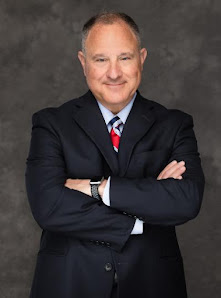
Matthew T. Mangino
GateHouse Media
November 9, 2018
Setting aside the bluster of soon-to-be House Speaker Nancy Pelosi and President Donald Trump, the big winner on election night was criminal justice reform. Ballot initiatives focused on softening the impact of crime and punishment were successful in blue states and red states.
In Florida, voters approved Amendment 4, a measure that restores voting rights for people who have completed their sentences after being convicted of a felony, excluding those convicted of murder or certain sex offenses.
According to Vox, the Sentencing Project, a non-profit advocacy group, estimated that nearly 1.5 million people in Florida could not vote in the midterm elections because of a conviction — about 9.2 percent of the state’s voting age population.
Could those potential voters have had an impact on the very competitive Governor and U.S. Senate races in Florida?
Marijuana advocates scored a number of substantial ballot victories including Michigan, which became the 10th state in the nation to approve recreational use of marijuana.
“Michigan will be the first state in the Midwest to end marijuana prohibition and replace it with a system in which marijuana is regulated for adult use,” Marijuana Policy Project deputy director Matthew Schweich, told the Washington Post.
With the addition of Michigan, nearly 80 million Americans — 25 percent of the total U.S. population — live in a state or jurisdiction that has legalized recreational marijuana. Medical marijuana was also approved by voters in Missouri and Utah.
Not all news was good for marijuana advocates. North Dakota voters overwhelmingly rejected an initiative that would have legalized marijuana without setting any possession limits or regulatory structure.
In Ohio, voters rejected an initiative that would have lessened the severity of some drug offenses.
Ohio prosecutors, judges, coroners and even Gov. John Kasich urged a “no” vote on the proposal, which would have reduced certain drug possession charges to misdemeanors. According to the Cincinnati Enquirer, the measure failed by a margin of nearly two-to-one.
An initiative in Washington will make it less difficult for prosecutors to pursue police officers who unlawfully use deadly force. Approval of Initiative 940 means that prosecutors will no longer have to prove law enforcement officers acted with “evil intent” or “malice” when considering whether to file criminal charges such as manslaughter. According to the Seattle Times, Washington was the only state with such restrictive language.
Abraham Lincoln once said “The ballot is stronger than the bullet.” Colorado wasn’t on Lincoln’s mind when he said that, but on election day — more than 150 years after the ratification of the 13th Amendment — Colorado voters officially abolished slavery.
Colorado is one of more than a dozen states whose Constitutions allow involuntary servitude as a form of criminal punishment. Colorado will no longer permit prisoners to do slave labor, reported The Associated Press.
A constitutional amendment to end non-unanimous jury verdicts in Louisiana was approved by the state’s voters. Louisiana and Oregon were the only states that permitted a less than unanimous verdict in a criminal trial.
The less-than-unanimous verdict was rooted in the state’s ardent racism that intensified after the Civil War and during the Jim Crow era.
The amendment was pushed through the Louisiana Legislature with strong support from groups that rarely collaborate. On the right, supporters included the Christian conservative, Louisiana Family Forum, and the Koch Brother’s political organization, Americans for Prosperity. On the left, supporters included the American Civil Liberties Union and Innocence Project New Orleans.
Voters in Florida, Georgia, Kentucky, Nevada, North Carolina and Oklahoma approved a ballot measure known as Marsy’s Law — the so-called crime victim’s bill of rights.
Marsy’s Law aims to ensure that victims and their family members are informed about all criminal proceedings, present and heard, and protected from the accused.
Finally, in the wake of the GOP’s election day loss of the House — a notable casualty surfaced in the criminal justice system — President Trump asked his embattled Attorney General Jeff Sessions to resign. He agreed, and so begins a new chapter in the tumultuous investigation of Russia, the president, the White House and the president’s advisors.
Matthew T. Mangino is of counsel with Luxenberg, Garbett, Kelly & George P.C. His book The Executioner’s Toll, 2010 was released by McFarland Publishing. You can reach him at www.mattmangino.com and follow him on Twitter @MatthewTMangino.
To read more CLICK HERE

Friday, November 9, 2018

Delaware to send high-security inmates to Pennsylvania

Hundreds of inmates from Delaware’s maximum-security prison, the site of a deadly inmate uprising last year, will be transferred to Pennsylvania in an effort to reduce overtime for severely understaffed correctional officers, reported The Associated Press.
The head of the union representing Delaware correctional officers criticized the move, saying the department needs to commit to improving compensation and recruitment and retention of prison guards.
Department of Correction officials said they have entered into a two-year agreement with the Pennsylvania Department of Corrections to accept up to 330 inmates from the James T. Vaughn Correctional Center in Smyrna. The agreement calls for Delaware to pay Pennsylvania $123 per inmate, per day, to house offenders who were sentenced in Delaware. DOC officials said the move would result in a savings of $8 per inmate, per day.
“Reducing mandatory overtime will provide relief for Delaware’s correctional officers, and help make our facilities safer for officers and inmates,” DOC Commissioner Perry Phelps said in a prepared statement.
Geoff Klopp, head of the Correctional Officers Association of Delaware, characterized the move as a half-measure.
“This is just another Band-Aid on the situation,” Klopp said. “It’s a temporary fix. Until we’re able to hire and retain correctional officers, we’re going to continue to have issues when it comes to safety and security in the facilities.”
All of the inmates selected for transfers will have more than five years remaining on their sentences and will return to Delaware to complete their sentences when the correctional officer vacancy rate is projected to be “significantly lower.”
There are currently 237 vacancies statewide, according to prison officials. They did not specify what would constitute a “significantly lower” number.
The vacancy rate remains stubbornly high despite efforts taken after the February 2017 riot to boost correctional officer salaries and offer recruitment and signing bonuses. DOC officials say they have hired 130 cadets since the salary increase became effective in July.
A review ordered by Democratic Gov. John Carney after the riot found that the dismissal by DOC officials of warnings about trouble brewing was indicative of an overcrowded, understaffed facility plagued by mismanagement, poor communication, a culture of negativity, and adversarial relationships among prison staff, administrators and inmates.
“For years, excessive mandated overtime and fatigue ... inconsistent management ... the lack of communication, adversarial relationships, and a general lack of respect at all levels ... have contributed to poor correctional officer morale and increasing hostility between inmates and correctional officers,” the review stated.
Carney noted that reducing mandatory overtime was among the report’s key recommendations.
“We have heard loud and clear that the high levels of mandatory overtime in Delaware’s prisons creates hardships for correctional officers and real security concerns inside our correctional facilities,” he said in a prepared statement.
Wednesday’s announcement comes amid the ongoing trial for three of the 18 inmates indicted on criminal charges after the riot. It also follows the filing of a class-action lawsuit last week on behalf of scores of inmates at the prison. The lawsuit alleges that they were subjected to inhumane conditions and physical and verbal abuse by guards both before and after the riot.
Sixteen inmates were charged with murder, kidnapping and other crimes following the riot, during which prison guard Steven Floyd was killed and three other staffers taken hostage. Two other inmates, including one who pleaded guilty to riot and is testifying for prosecutors, were not charged with murder. The defendants are scheduled to be tried in groups over the next several months.
To read more CLICK HERE


Thursday, November 8, 2018

Fox News: Trump's appointment of acting AG may be illegal

President Donald Trump’s appointment of Matthew Whitaker as Acting Attorney General may be illegal, Andrew Napolitano, senior judicial analyst for Fox News, reported the Huffington Post. 
“Under the law, the person running the Department of Justice must have been approved by the United States Senate for some previous position. Even on an interim post,” Napolitano told Fox News’ Dana Perino. 
Former Attorney General Jeff Sessions was dismissed on Wednesday and Napolitano said his interim replacement should have been Deputy Attorney General Rod Rosenstein
While Whitaker was confirmed by the Senate in 2004 when he was appointed U.S. Attorney for the Southern District of Iowa, Napolitano said that he was nevertheless ineligible to serve in his current post as the confirmation was not “for a leadership position in the Justice Department.”
“Who has been confirmed and who’s next in line? Deputy Attorney General Rosenstein,” Napolitano added. 
To read more CLICK HERE

Wednesday, November 7, 2018

Justice Kavanaugh may be swing vote in death penalty case


Conservative new U.S. Supreme Court Justice Brett Kavanaugh joined liberal colleagues in raising concerns about Missouri’s plan to use lethal injection to execute a murderer with a rare medical condition, reported Reuters.
Lawyers for Russell Bucklew, 50, have argued that because of a congenital condition called cavernous hemangioma that leaves him with blood-filled tumours on his body, the lethal injection could cause undue agony in violation of the U.S. Constitution’s prohibition on cruel and unusual punishment.
Based on the one-hour oral argument, it is not clear how the court will rule in Bucklew’s case but Kavanaugh’s comments in his first death penalty-related oral argument since joining the court last month suggest he could potentially break with fellow conservatives.
If he joins the court’s four liberals, the court could issue a narrow decision sending the case back to lower courts to determine whether the state can accommodate Bucklew’s medical issues.
To read more CLICK HERE

Tuesday, November 6, 2018

Mangino on the Law and Crime Network Daily Debrief

Watch my appearance on the Law and Crime Network Daily Debrief with Aaron Keller.
To watch the segment CLICK HERE

Glasgow takes on violence as a health problem and homicides plummet

In 2005, the World Health Organization dubbed Glasgow, Scotland the “murder capital of Europe.” There had been 83 homicides the previous year in the Glasgow region, where gangs were known for their booze-and-blades culture, reported the Washington Post.
Exasperated police in Glasgow decided to rethink strategy. They set up a violence reduction unit (VRU) guided by the philosophy that violence is like a public health issue: Violent behavior spreads from person to person. To contain it, you need to think in terms of transmission and risk, symptoms and causes.
“You cannot arrest your way out of this problem,” said Niven Rennie, director of the now-national Scottish VRU, a unit funded by the government with a budget of $1.6 million this year.
Scottish police plucked ideas from the Cure Violence project in Chicago, Boston’s Operation Ceasefire and Homeboy Industries in Los Angeles, among other initiatives. They formed partnerships with local teachers, doctors and social workers.
They didn’t abandon traditional policing. Shortly after launching the VRU, police ratcheted up stop-and-search and successfully campaigned for legislation that increased the maximum sentences for carrying a knife. But increasingly, they emphasized the interruption and prevention of violent behavior. They are intervening in hospitals, working with partners in schools and helping former offenders get back to work.
Meanwhile, over the past decade, Glasgow has seen a 60 percent drop in homicides, and violent crime in Scotland has fallen to historic lows.
The notion that the public health approach may have contributed to the decline has brought officers from as far afield as Canada and New Zealand to Glasgow to learn more.
And in London, where knife crime has risen by 50 percent in the past three years, Mayor Sadiq Khan recently announced the creation of a violence reduction unit modeled on Scotland’s. “We have listened and researched the public health approaches in cities like Glasgow, where their own long-term approach over more than a decade has delivered large reductions in violence,” the mayor said in a statement.
Researchers urge caution in assessing the impact of Scotland’s program. They stress the difficulty of pinpointing and disentangling the variables that influence crime rates.
“There are a lot of factors at play,” said Susan McVie, a professor of criminology at the University of Edinburgh.
Scottish police have been “bold, they’ve been progressive in a way that has not happened in the city of Glasgow before,” said Alistair Fraser, a criminology lecturer at the University of Glasgow and author of a book on gang identity. Fraser said the VRU has been successful at changing the narrative about crime, but he was hesitant about more concrete results. “There is a general sense it’s a good thing,” he said, “but little in the way of hard proof.”
The picture is complicated by statistics showing that crime also has decreased in areas of Scotland where the VRU is not active. Other possible explanations for the decline include anti-knife campaigns in Scottish schools and a trend of young people spending more time at home and less lingering on the streets.
To read more CLICK HERE

Monday, November 5, 2018

Gun-carrying border vigilantes answer Trump's call to arms

Gun-carrying civilian groups and border vigilantes have heard a call to arms in President Trump’s warnings about threats to American security posed by caravans of Central American migrants moving through Mexico, reported the Washington Post. 
They’re packing coolers and tents, oiling rifles and tuning up aerial drones, with plans to form caravans of their own and trail American troops to the border.
“We’ll observe and report, and offer aid in any way we can,” said Shannon McGauley, a bail bondsman in the Dallas suburbs who is president of the Texas Minutemen. McGauley said he was preparing to head for the Rio Grande in coming days.
“We’ve proved ourselves before, and we’ll prove ourselves again,” he said.
McGauley and others have been roused by the president’s call to restore order and defend the country against what Trump has called “an invasion,” as thousands of Central American migrants advance slowly through southern Mexico toward the U.S. border. Trump has insisted that “unknown Middle Easterners,” “very tough fighters,” and large numbers of violent criminals are traveling among the women, children and families heading north on foot.
The Texas Minutemen, according to McGauley, have 100 volunteers en route to the Rio Grande who want to help stop the migrants, with more likely on the way.
To read more CLICK HERE