Showing posts with label Autocracy Watch. Show all posts

Monday, July 6, 2026

Chicago FBI chief leaving: ' Anyone who is not on board with THIS FBI under the leadership of President Trump . . . is free to leave'

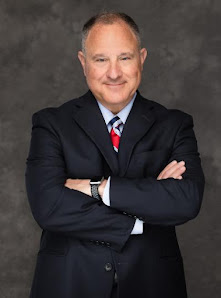
The head of the FBI’s Chicago field office is abruptly leaving his position, according to a resignation message he sent to colleagues and multiple people familiar with the situation who said he was told to retire, reported The Associated Press.

Douglas DePodesta has served as special agent in charge in Chicago, one of the FBI’s largest offices, for nearly two years and has been with the bureau since 2002.

He told colleagues that his last day would be Monday, according to a message seen by The Associated Press. Multiple people familiar with the matter, speaking on condition of anonymity to discuss a personnel move, said DePodesta had been pushed to retire.

The events leading up to his departure were not immediately clear, but DePodesta alluded in his farewell note to a conflict that he suggested had precipitated it.

“I’ve never backed down from a fight, as long as it meant our personnel could continue serving the FBI’s mission,” DePodesta wrote in the message. “Unfortunately, that has proved unpopular over time and my departure is a consequence of that.”

The move is part of a broader upheaval in the FBI’s workforce as Director Kash Patel has sought to force out line agents and supervisors alike who are perceived as not supporting the Trump administration agenda. It also comes amid prolonged tumult in the law enforcement community in Chicago, whose top federal prosecutor, Andrew Boutros, described this week a sweeping review of more than 1,000 grand jury presentations made by Illinois prosecutors following the dismissal of a high-profile case over misconduct.

The FBI declined to comment, but the bureau’s “rapid response” social media account on X responded to a separate post about DePodesta’s departure by saying: “It’s simple: Anyone who is not on board with THIS FBI under the leadership of President Trump — which has achieved the lowest murder rate ever — is free to leave.”

DePodesta also quoted in his note from a farewell message from Patel’s predecessor, former Director Chris Wray, who reminded the workforce that “you have been who the American people have turned to in their darkest moments” and praised them for having “stayed true to the values that define who we are, and to the qualities for which we stand: Fidelity, Bravery and Integrity.”

To read more CLICK HERE

Sunday, June 14, 2026

Autocracy Watch: USPS ordered not to deliver mail-in ballots in Democrat states

State election officials could soon face a stark choice: Hand over voter lists to the Trump administration or risk losing Postal Service delivery for mail-in ballots, reported CNN.

That dilemma stems from newly proposed USPS rules that seek to comply with an executive order President Donald Trump signed this spring to crack down on mail-in voting. If courts let the order stand, it would give the federal government an unprecedented role in elections — and could put even more voter data in the hands of Trump officials searching for supposed election fraud.

The proposed rules lay out new conditions that states would have to meet to send ballots through the mail, including giving the agency lists of all voters set to receive mail ballots.

So far, 23 Democratic-led states and the District of Columbia are suing, as are Democratic Party leaders and non-partisan voter advocacy groups, setting up a potentially active summer of high-stakes judicial rulings.

The Trump administration cleared an initial legal hurdle last month, when a federal judge in Washington, DC, who is overseeing one set of the cases, declined to block Trump’s executive order, allowing the Postal Service to begin implementing it.

The Democratic Party groups are asking an appeals court to speed up its review of that decision, warning that voters around the country could be disenfranchised in this year’s midterm elections if the proposal is not blocked.

In an interview with CNN, Maine Secretary of State Shenna Bellows, a Democrat whose state is part of the coalition that filed a legal challenge in Boston, said that if courts rule for the Trump administration, “Then you will see a virtual elimination of mail-in voting, unless the states supply voter lists to the federal government.”

To read more CLICK HERE

Thursday, May 7, 2026

Autocracy Watch: Undermining the Integrity of the midterm elections

Perhaps nothing better reflects the breakdown of the guardrails that thwarted President Trump’s rashest impulses in 2020 than his creation last fall of a special White House post reinvestigating his loss to Biden, reported ProPublica. 

In December 2020, just days after AG William Barr rebuffed Trump’s Antrim County claims, lawyers in the White House counsel’s office helped prevent the president from heeding activists’ call to essentially declare martial law to seize voting machines. This multihour shouting and cussing match has been called the craziest meeting of the first Trump administration.

But the lawyer whom Trump hired in 2025 as his director of election security and integrity, Kurt Olsen, had worked to overturn Trump’s loss in court in 2020 and was later sanctioned by judges, including for making baseless allegations about Arizona elections.

Olsen’s work in the second Trump administration has breached the firewall between the White House and DOJ officials, established after Watergate to prevent law enforcement officers from making decisions based on political pressure, said Gary Restaino, a former U.S. attorney in Arizona.

“This is not a constitutional or even a statutory requirement,” Restaino said, “but it’s a democracy requirement to make sure that citizens throughout America understand that decisions about life and liberty are being made in an objective and consistent manner.”

In a previously unreported series of events, around the end of 2025, Olsen flew to Georgia to meet with Paul Brown, the head of the FBI’s Atlanta field office, according to people familiar with the matter. 

Olsen wanted the FBI to seize 2020 ballots from Fulton County, a Democratic stronghold, and gave Brown a report he claimed would justify the extraordinary action. Brown and his team emphasized to Olsen that any investigation his team did would be independent and fair. 

When Brown and his team examined the report, they found that Georgia’s election board had already looked into its allegations, dismissing many altogether, and concluding that others came down to human error, not criminal wrongdoing. The report had been assembled by a longtime ally of Olsen’s and participant in the Election Integrity Network who had a history of discredited claims, ProPublica has reported.

Based on their own investigation, Brown’s team submitted an affidavit to their superiors at DOJ that did not make a strong enough case to move forward with what Olsen wanted.

Soon after, Brown was offered a choice: retire or be moved to a new office, people with knowledge of the exchange told ProPublica. 

Olsen did not respond to requests for comment.

An FBI spokesperson said that Brown “elected to retire” and that its “work in the election security space is entirely consistent with the law.”

Brown’s ouster after refusing to carry out the seizure of 2020 election materials has been reported, but Olsen’s involvement and the details of their interactions leading to Brown’s retirement have not been previously disclosed. 

With Brown gone, the case moved ahead under his replacement. 

To read more CLICK HERE

Saturday, April 18, 2026

Tulsi Gabbard, Director of Suck up to the President goes after whistleblower

Director of National Intelligence Tulsi Gabbard asked the Justice Department to investigate two former government officials who played a central role in President Trump's first impeachment inquiry, reported CBS News..

A spokesperson for Gabbard's office confirmed that she drafted criminal referrals for a whistleblower and a former intelligence community watchdog, but did not detail what specific crimes are alleged. Whether to pursue a criminal investigation following a referral is up to prosecutors at the Justice Department.

The referrals came after Gabbard criticized how former Intelligence Community Inspector General Michael Atkinson handled the 2019 whistleblower complaint earlier this week, releasing a trove of documents linked to Atkinson.

The whistleblower — whose identity has not been formally disclosed — reported an "urgent concern" about President Trump's request for Ukrainian President Volodymyr Zelenskyy to investigate former Vice President Joe Biden. The complaint also expressed concerns about how records of a Trump-Zelenskyy phone call were handled, and about the role of Mr. Trump's then-personal attorney, Rudy Giuliani, in the U.S.'s relationship with Ukraine.

"I have received information from multiple U.S. Government officials that the President of the United States is using the power of his office to solicit interference from a foreign country in the 2020 U.S. election," the whistleblower wrote. "This interference includes, among other things, pressuring a foreign country to investigate one of the President's main domestic political rivals."

Mr. Trump was impeached in the House of Representatives in late 2019, but was acquitted in a Senate vote mostly along party lines in early 2020. He has long denied any wrongdoing, referring to his phone call with Zelenskyy as "perfect."

Gabbard alleged in a post on X Monday that "deep state actors" in the intelligence community "concocted a false narrative that Congress used to usurp the will of the American people and impeach duly-elected President @realDonaldTrump in 2019." She argued that the inspector general relied on "second-hand evidence" in looking into the whistleblower complaint.

To read more CLICK HERE

Tuesday, March 3, 2026

Federal judges feel under siege by current political rhetoric

When the Supreme Court recently struck down President Trump's tariffs, he lashed out at two Justices he had nominated calling them fools and lapdogs. The president has frequently railed against judges when they rule against him. What often happens next is a barrage of violent threats from his followers against those judges. 

CBS News spoke with 26 federal judges – nine Democratic appointees, 17 Republican, both sitting and retired. The sitting judges told us they feel under siege. Most would not appear on camera, fearful for their safety. Judge John Coughenour – appointed by Ronald Reagan - is one of the few who would. He blocked President Trump's bid to end birthright citizenship. He wasn't prepared for what happened next.

Judge John Coughenour: My wife and I are at home. And the doorbell rings. And I go to the door. And there's, I think, five sheriff's deputies there with long rifles –

Bill Whitaker: And they show up with guns drawn?

Judge John Coughenour: Oh yeah. Yes, yes. Long guns, very intimidating guns. And they said to me, "Sir, could we see your wife?" And I said, "whatever for?" And they said, well, sir, we've had a report that you've murdered your wife."

It was a cruel hoax. The next day? A bomb threat. For John Coughenour, a federal district court judge in Washington state, it didn't end there.

Judge John Coughenour: There was a congressman that had a wanted poster. It just said Wanted in big letters at the top and then a picture of several of us. It said everything except "dead or alive".

His trouble started when President Trump signed an executive order to end the 14th Amendment's guarantee of citizenship for infants born on U.S. soil to non-citizens. Judge Coughenour ruled it, quote, "blatantly unconstitutional." The threats poured in.

Judge John Coughenour: Some of it was very very ugly, and very threatening.

Bill Whitaker: Death threats?

Judge John Coughenour: Oh yes, yes dozens of em. Dozens if not hundreds.

Judge Coughenour told us threats come with the turf. He has sentenced an al Qaeda bomber and Montana militia members and needed round the clock protection. But he said he'd never had as many death threats as with the birthright citizenship case.

Judge Coughenour: I've been at this for 44 years. I have never encountered the hostility toward the judiciary that has existed in this country in the, the last year. And I don't think it's' because we're making bad decisions. I think it's because there are people who think that they can make a lot of political hay out of criticizing the federal judiciary.

President Trump (in 2025): "And also we cannot allow a handful of communist radical left judges to obstruct the enforcement of our laws and assume the duties that belong solely to the president of the United States."

When President Trump lost a battle in court to deport migrants, he called the judge a lunatic. When immigration crackdowns were ruled illegal, he called the judges monsters. It's incendiary comments like that that have provoked a torrent of death threats. 

Our reporting found hundreds of threats were left on judges voicemails. This one after a judge ruled the president had violated the First Amendment:

Recording of threat: I hope your whole family and everybody you love is raped in front of you and has their heads cut off.

And this one after a judge ruled the president couldn't cut certain government benefits.

Recording of threat: I wish somebody would f****** assassinate your ass.

To read more CLICK HERE

Sunday, February 15, 2026

Stay Outraged: Trump summarily attacks another boat in the Caribbean

A U.S. military strike killed three people and blew up a boat in the Caribbean Sea on Friday, the U.S. Southern Command said, raising the death toll in the Trump administration’s five-month-old campaign against suspected drug smugglers at sea to 133, according to The New York Times.

The attack was the first known strike in the Caribbean Sea since early November and the 39th disclosed by the U.S. government in the campaign, according to a tracker maintained by The New York Times.

The announcement on Friday was accompanied by an 11-second video clip that appeared to show a missile striking the middle of the boat as it traversed open waters, and destroying it.

The command said, citing unspecified intelligence, that the boat had been following “known drug-trafficking routes in the Caribbean” and that it was engaged in narco-trafficking operations.

To read more CLICK HERE

Sunday, December 21, 2025

The trappings of royalty: 'America's wannabe King'

When President Trump hosted the crown prince of Saudi Arabia last month, he pulled out all the stops. To the traditional pomp of a formal White House visit, he added a few even fancier touches: a stirring military flyover, a procession of black horses and long, regal tables for the lavish dinner in the East Room instead of the typical round tables.

For surprised White House veterans who were paying attention, the unusual flourishes looked a little familiar. Just two months earlier, King Charles III of Britain welcomed Mr. Trump for a state visit that included, yes, a stirring military flyover, a procession of black horses and a long, regal table for the lavish dinner in St. George’s Hall at Windsor Palace.

In his first year back in office, reported The New York Times, Mr. Trump has unabashedly adopted the trappings of royalty just as he has asserted virtually unbridled power to transform American government and society to his liking. In both pageantry and policy, Mr. Trump has established a new, more audacious version of the imperial presidency that goes far beyond even the one associated with Richard M. Nixon, for whom the term was popularized half a century ago.

He no longer holds back, or is held back, as in the first term. Trump 2.0 is Trump 1.0 unleashed. The gold trim in the Oval Office, the demolition of the East Wing to be replaced by a massive ballroom, the plastering of his name and face on government buildings and now even the John F. Kennedy Center for the Performing Arts, the designation of his own birthday as a free-admission holiday at national parks — it all speaks to a personal aggrandizement and accumulation of power with meager resistance from Congress or the Supreme Court.

Nearly 250 years after American colonists threw off their king, this is arguably the closest the country has come during a time of general peace to the centralized authority of a monarch. Mr. Trump takes it upon himself to reinterpret a constitutional amendment and to eviscerate agencies and departments created by Congress. He dictates to private institutions how to run their affairs. He sends troops into American streets and wages an unauthorized war against nonmilitary boats in the Caribbean. He openly uses law enforcement for what his own chief of staff calls “score settling” against his enemies, he dispenses pardons to favored allies and he equates criticism to sedition punishable by death.

To read more CLICK HERE

Monday, December 15, 2025

Trump is about to pay himself, with taxpayer dollars, $230 million over FBI raid

Donald Trump is about to order the government to pay him “damages” for the FBI raid on his Mar-a-Lago mansion and for special prosecutor Jack Smith’s two investigations of him — one for stealing, hoarding, and improperly sharing classified documents, and the other for Trump’s effort to overturn the 2020 election, reported The Watch. He’s going to pay himself $230 million.

So Trump — who didn’t spend a minute behind bars — about to swindle about 50 percent more than the total amount of money paid to the 97 innocent people who were incarcerated for more than 1,200 years in Texas. Or about 12 percent more than the total paid last year to 957 victims of police brutality in New York City.

To read more CLICK HERE

Friday, December 5, 2025

NBC News: Grand jury declines to indict N.Y. Attorney General Letitia James, less than two weeks after the first case was dismissed

The Justice Department failed to secure an indictment against New York Attorney General Letitia James, a person familiar with the matter told NBC News.

The presentation to the grand jury came less than two weeks after the original criminal case against her was dismissed.

James, a frequent political target of President Donald Trump’s who had successfully brought a fraud lawsuit against him, had previously been indicted by a grand jury on one charge of bank fraud and another of making false statements to a financial institution.

James has denied any wrongdoing. In a statement Thursday in response to reports that a grand jury did not re-indict her she said, "As I have said from the start, the charges against me are baseless. It is time for this unchecked weaponization of our justice system to stop."

"I am grateful to the members of the grand jury and humbled by the support I have received from across the country. Now, I will continue to do my job standing up for the rule of law and the people of New York," James said.

Lindsey Halligan, the acting U.S. attorney for the Eastern District of Virginia and a former personal attorney to Trump with no prior prosecutorial experience, presented the case to a grand jury on her own in the first go-round — and that case was declared void on Nov. 24 when a judge found Halligan’s appointment was unlawful.

The Justice Department initially vowed to appeal the ruling by U.S. District Judge Cameron Currie, but ultimately decided to seek a new, untainted indictment against James, a source familiar with the deliberations told NBC News earlier this week.

The new case was presented to a grand jury in Norfolk, Virginia, by different prosecutors.

The failure to secure an indictment on Thursday does not bar prosecutors from attempting to do so again in the future.

A separate source familiar with the matter said there “should be no premature celebrations.”

The Justice Department does not comment on grand jury matters.

Prosecutors have also been discussing trying to again bring a case against former FBI Director James Comey, who was indicted in October on charges of making a false statement to Congress and obstructing a congressional investigation.

Currie dismissed the case against him on the same day she tossed the case against James on the same grounds.

Trump named Halligan U.S. attorney for the Eastern District on Sept. 20, the day after he forced out his initial pick, Erik Siebert, who resisted pressure to prosecute Comey and James.

The Halligan appointment also came after Trump urged Attorney General Pam Bondi in a social media post to push ahead with prosecutions of Comey, James and another perceived political adversary, Democratic Sen. Adam Schiff of California.

“Pam: I have reviewed over 30 statements and posts saying that, essentially, ‘same old story as last time, all talk, no action. Nothing is being done. What about Comey, Adam ‘Shifty’ Schiff, Leticia??? They’re all guilty as hell, but nothing is going to be done,’” Trump said the post, which a source previously confirmed to NBC News the president had intended as a direct message to Bondi, not a public post.

“We can’t delay any longer, it’s killing our reputation and credibility,” Trump continued, while praising Halligan as “a really good lawyer.”

To read more CLICK HERE

Thursday, December 4, 2025

Vice Admiral Bradley to testify about Hegseth's order to 'kill everyone'

Navy Vice Adm. Frank "Mitch" Bradley will testify today before the chairs of the armed services committees and top Democrats, regarding the second strike on survivors following an attack on a "drug" boat in early September.  Below is a primer on disobeying unlawful orders prepared by Just Security:

 It has long been the case under customary international law that “superior orders” is no defense for war crimes. The Charter of the International Military Tribunals at Nuremberg and Tokyo excluded the defense (arts. 8 and 6, respectively), as did the 1950 Nuremberg Principles (prin. IV). The absence of a superior orders defense has also been confirmed in the statutes of modern war crimes tribunals, including those of the International Criminal Court and the International Criminal Tribunals for the Former Yugoslavia and Rwanda (arts. 337, and 6, respectively). Indeed, the defense is unavailable to international law violations generally. For instance, the U.N. Convention Against Torture and the Inter-American Convention on the Forced Disappearance of Persons prohibit superior orders as a defense in national legislation implementing their prohibitions (arts. 2 and VIII, respectively). 

As with the affirmative duty to disobey an unlawful order, the ICRC has accurately stated that under customary international law, “[o]beying a superior order does not relieve a subordinate of criminal responsibility if the subordinate knew that the act ordered was unlawful or should have known because of the manifestly unlawful nature of the act ordered.” (ICRC Customary International Humanitarian Law study, Rule 155). 

U.S. military law likewise rejects the defense of superior order in the Manual for Courts-Martial. Rule 916(d) provides, “It is a defense to any offense that the accused was acting pursuant to orders unless the accused knew the orders to be unlawful or a person of ordinary sense and understanding would have known the orders to be unlawful.” The touchstone case reflecting the principle is U.S. v. Calley, which dealt with the murder of 22 children, women, and old men in the South Vietnamese village of My Lai. Lt. Calley claimed he was obeying an order because “he had been taught the doctrine of obedience throughout his military career” and that he “was acting in ignorance of the laws of war.” The U.S. Court of Military Appeals held that, 

the obedience of a soldier is not the obedience of an automaton. A soldier is a reasoning agent, obliged to respond, not as a machine, but as a person. The law takes these factors into account in assessing criminal responsibility for acts done in compliance with illegal orders.

The acts of a subordinate done in compliance with an unlawful order given him by his superior are excused and impose no criminal liability upon him unless the superior’s order is one which a man of ordinary sense and understanding would, under the circumstances, know to be unlawful, or if the order in question is actually known to the accused to be unlawful.

Thus, it is unlawful to obey an unlawful order, and merely following clearly illegal orders provides no defense. This being so, the questions in the Sept. 2 strikes are whether Secretary Hegseth’s reported order to Adm. Bradley was clearly unlawful and whether Bradley’s apparent follow-on order to conduct the second strike was likewise manifestly unlawful.

To read more CLICK HERE

Tuesday, December 2, 2025

DOJ considers new indictments against Comey and James

The U.S. Justice Department is weighing seeking new indictments against former FBI Director James Comey and New York Attorney General Letitia James, after a federal judge dismissed both cases last week, according to two people familiar with the matter, reported Reuters. 

The department could seek new charges against Comey and James as soon as this week, though the timing was not yet clear, the people added, speaking anonymously in order to discuss non-public department deliberations.

The Week in Breakingviews newsletter offers insights and ideas from Reuters' global financial commentary team. Sign up here.

Representatives for James could not be immediately reached for comment. An attorney for Comey declined to comment.

A federal judge last week dismissed the criminal cases against both Comey and James - two of President Donald Trump's perceived political enemies - after she determined that both indictments were secured by an unlawfully appointed U.S. Attorney in Virginia's Eastern District.

In her ruling, U.S. District Judge Cameron McGowan Currie found that the Trump Justice Department violated the U.S. Constitution's Appointments Clause and federal law by appointing Lindsey Halligan in September as Interim U.S. Attorney.

Halligan's predecessor was forced out of his job after expressing concerns about the evidence in both cases. Halligan presented evidence alone to the grand juries in both criminal cases. Career prosecutors in her office refused to participate.

Currie's ruling left the door open for the Justice Department to try to seek fresh indictments.

Both Comey and James have been longtime targets of Trump's ire. Comey as FBI director oversaw an investigation into alleged ties between Trump's 2016 election campaign and the Russian government, and was fired by Trump in 2017.

James, an elected Democrat, successfully sued Trump and his family real estate company for fraud.

Comey pleaded not guilty to charges of making false statements and obstructing Congress after he was accused of lying and authorizing leaks to the news media.

00:11Market Talk: Europe's economy 'has shown impressive resilience'

The video player is currently playing an ad. You can skip the ad in 5 sec with a mouse or keyboard

James pleaded not guilty to charges of bank fraud and lying to a financial institution. Halligan alleged that she filed misleading mortgage documents to secure more favorable loan terms.

Both Comey and James have alleged the prosecutions against them were vindictive, driven by Trump's animus towards them.

It was unclear whether prosecutors could seek to bring a new case against Comey over the same conduct. The five-year statute of limitations on the charges expired on September 30, and Comey's lawyers have already indicated in court filings that they do not believe prosecutors have more time to refile the charges.

To read more CLICK HERE

Monday, December 1, 2025

Did Secretary of War order 'no quarter will be given'?

There can be no conceivable legal justification for what the Washington Post reported:  The U.S. Special Operations Forces killed the survivors of a first strike on a drug boat off the coast of Trinidad who, in the Post’s words, “were clinging to the smoldering wreck.”

According to the blog Executive Function, Section 5.4.7 of the DOD Law of War Manual says:

Prohibition Against Declaring That No Quarter Be Given. It is forbidden to declare that no quarter will be given. This means that it is prohibited to order that legitimate offers of surrender will be refused or that detainees, such as unprivileged belligerents, will be summarily executed. Moreover, it is also prohibited to conduct hostilities on the basis that there shall be no survivors, or to threaten the adversary with the denial of quarter. This rule is based on both humanitarian and military considerations. This rule also applies during non-international armed conflict.

This is an old principle of the laws of war. The Hague Regulations of 1907 state that “it is especially forbidden . . . [t]o declare that no quarter will be given.” The 1863 Lieber Code—the famous U.S. government rules governing military conduct during the Civil War—provides: “Whoever intentionally inflicts additional wounds on an enemy already wholly disabled, or kills such an enemy, or who orders or encourages soldiers to do so, shall suffer death, if duly convicted, whether he belongs to the Army of the United States, or is an enemy captured after having committed his misdeed.” And the currently governing DOD Manual in Section 5.9 states clearly that persons “placed hors de combat may not be made the object of attack.” The Manual defines “hors de combat” to include “persons . . . otherwise incapacitated by . . . shipwreck.”

In short, if the Post’s facts are correct, it appears that Special Operations Forces committed murder when the “two men were blown apart in the water,” as the Post put it.

It is unclear from the Post’s reporting precisely what role Secretary of Defense Pete Hegseth played in the decision to kill the survivors of the first strike. The story opens:

The longer the U.S. surveillance aircraft followed the boat, the more confident intelligence analysts watching from command centers became that the 11 people on board were ferrying drugs.

Defense Secretary Pete Hegseth gave a spoken directive, according to two people with direct knowledge of the operation. “The order was to kill everybody,” one of them said.

The Post then reports that after then-Joint Special Operations Command chief U.S. Navy Admiral Frank “Mitch” Bradley became aware of the survivors, he “ordered the second strike to fulfill Hegseth’s directive that everyone must be killed.” This makes it seem like Hegseth—even if his initial “order” was (as it appears) a command to take no quarter—might not have been in the loop between the first and second strikes.

I do not believe, based on the facts in the Post story, that Bradley could have relied on Hegseth’s order—even if Hegseth formally ordered the second strike. The prohibition on targeting a disabled combatant is so clear that Bradley had a duty, in the words of 18.22.4 of the Manual, “to refuse to comply with clearly illegal orders to commit violations of the law of war.”

According to the Post, Bradley at some point argued that “the survivors were still legitimate targets because they could theoretically call other traffickers to retrieve them and their cargo.” That is wrong. The theoretical possibility of calling other traffickers for help is not the test. The incapacitated survivors simply may not be targeted unless, as Section 5.9 of the Manual says, they affirmatively committed a “hostile act” or “attempt[ed] to escape.” If the Post’s facts are in the vicinity of the truth, that could not have happened. (The Intercept, which reported the kernel of this event in September, said that the survivors were “killed shortly after in a follow-up attack.”)

wrote a few weeks ago about the possibility of an OLC golden shield as a defense to illegal conduct in connection with the boat strikes. OLC is forbidden to “advance an interpretation of the law as the position of the United States that contravenes the President or the Attorney General’s opinion on a matter of law” and is exercising power delegated from an Attorney General unflinchingly beholden to the President. But I do not believe that even the Bondi OLC could legally justify the events the Post reported. In an opinion last summer upholding the general legality of the drug boat campaign, OLC apparently stated (or at least assumed) that the law of armed conflict governed the strikes. In this light, it is hard to see how OLC could bless these strikes, much less do so ex post. Which leaves the pardon power as the option that can, and no doubt will, eventually immunize what happened.

Hegseth has emphasized that he wants to restore the “warrior ethos” in the U.S. military. In the hours after the story, he signaled generic support for the boat strike campaign and chest-thumped that “We have only just begun to kill narco-terrorists.”

Yet the warrior ethos has always demanded honorable conduct in warfare. The Navy Seals, for example, describe themselves as “a special breed of warrior” but the Seal Ethos thrice emphasizes the importance of honor, including “on . . . the battlefield.” And surely the warrior ethos, whatever else it means, doesn’t require killing helpless men clinging to the burning wreckage of a blown-up boat. The DOD Manual is clear because the law here is clear: “Persons who have been incapacitated by . . . shipwreck are in a helpless state, and it would be dishonorable and inhumane to make them the object of attack.”

To read more  CLICK HERE

Saturday, November 29, 2025

Veterans in Congress targeted after video about ignoring 'illegal orders'

Democratic lawmakers who appeared in a social media video urging U.S. troops to defy “illegal orders” say the FBI has contacted them to begin scheduling interviews, signaling a possible inquiry into the matter, reported The Associated Press.

It would mark the second investigation tied to the video, coming a day after the Pentagon said it was reviewing Democratic Sen. Mark Kelly of Arizona over potential violations of military law. The FBI and Pentagon actions come after President Donald Trump accused the lawmakers of sedition and said it is “punishable by DEATH” in a social media post.

Together, the inquiries mark an extraordinary escalation for federal law enforcement and military institutions that traditionally steer clear of partisan clashes. They also underscore the administration’s willingness to push legal limits against its critics, even when they are sitting members of Congress. Lawmakers in the video urge troops to reject any illegal orders from their superiors, something they are already duty-bound to do.

“President Trump is using the FBI as a tool to intimidate and harass Members of Congress,” a group of four Democratic House members said in a statement Tuesday. “Yesterday, the FBI contacted the House and Senate Sergeants at Arms requesting interviews.”

Sen. Mark Kelly, D-Ariz., speaks during a Senate Intelligence Committee hearing, at the Capitol in Washington, Jan. 15, 2025. (AP Photo/John McDonnell, File)

Democrats call inquiry a ‘scare tactic’

Michigan Sen. Elissa Slotkin, one of the six Democratic lawmakers in the video, told reporters Tuesday that “last night the counterterrorism division at the FBI sent a note to the members of Congress, saying they are opening what appears to be an inquiry against the six of us.” Slotkin called it a “scare tactic by” Trump.

“Whether you agree with the video or don’t agree with the video, the question to me is: is this the appropriate response for a president of the United States to go after and seek to weaponize the federal government against those he disagrees with?” said Slotkin.

The group of four Democratic House members said in their statement that “no amount of intimidation or harassment will ever stop us from doing our jobs and honoring our Constitution.”

All six of the Democratic lawmakers in the video have served in the military or intelligence community.

Republican Sen. Lisa Murkowski of Alaska criticized both inquiries on social media, saying that accusing the lawmakers “of treason and sedition for rightfully pointing out that servicemembers can refuse illegal orders is reckless and flat-out wrong.”

“The Department of Defense and FBI surely have more important priorities than this frivolous investigation,” wrote Murkowski.

FBI Director Kash Patel speaks with reporters during a news conference at the Department of Justice, Wednesday, Nov. 19, 2025, in Washington. (AP Photo/Mark Schiefelbein)

FBI provides no insight into interview requests

The FBI went through the top security officials for the House and Senate to request interviews with each of the six lawmakers. The lawmakers said they had no further information and the FBI has not made clear on what basis they were seeking the interviews.

The FBI declined to comment Tuesday, but Director Kash Patel, in an interview with journalist Catherine Herridge, described it as an “ongoing matter” in explaining why he could not discuss details.

To read more CLICK HERE

Wednesday, November 26, 2025

Trump accuses Democrat leaders in Congress of sedition, what does it mean?

President Donald Trump accused six Democratic members of Congress of committing sedition, a claim that his administration has stuck to amid a fierce national debate that began when the lawmakers urged military and intelligence personnel to “refuse illegal orders.”

The Democratic members, who are all veterans or members of the intelligence community, shared a video online last week in which they accused Trump’s administration of pitting service members against American citizens and warned against orders that would violate the Constitution, reported the Philadelphia Inquirer.

The lawmakers did not reference specific orders, but members have spoken against strikes in the Caribbean and Trump’s deployment of the National Guard in American cities — both of which have faced legal scrutiny — as cause for concern.

Trump first responded to the video with a string of posts on his social media platform, Truth Social, calling for the lawmakers to be arrested and put on trial for sedition, “punishable by DEATH,” and sharing posts against them, including one that called for them to be hanged.

Two of the members represent Pennsylvania: U.S. Reps. Chrissy Houlahan (D., Chester), an Air Force veteran, and Chris Deluzio (D., Allegheny), a Navy veteran.

On Monday, the Department of Defense announced that it would investigate Sen. Mark Kelly (D., Ariz.), a former naval officer and the one veteran in the video who is still obligated to follow military laws because he served long enough to become a military retiree. The announcement threatened to call Kelly back to active duty for court-martial proceedings.

On Tuesday, a Justice Department official told Reuters that the FBI has requested interviews with the Democrats who appeared in the video, which some of the lawmakers publicly corroborated. The FBI declined to comment when reached by The Inquirer.

As the debate over the video escalates in the wake of Trump’s sedition accusation and his administration’s actions, a rarely used charge and the intricacies of military law have been thrown into the spotlight.

What is sedition, and is it punishable by death?

Sedition is an incitement of a rebellion or encouragement of attacking authority, or, in other words, the intent to overthrow the government, according to legal and military experts. When acting with others, it is called seditious conspiracy.

Members of the Proud Boys and Oath Keepers were convicted of seditious conspiracy for the attack on the U.S. Capitol on Jan. 6, 2021, but within hours of beginning his second term, Trump granted sweeping pardons and commutations for those charged in the riot.

For civilians, sedition is a violation of federal law and carries prison time. It is not punishable by death.

Active-duty military, however, must follow the Uniform Code of Military Justice (UCMJ). While the military law has overlap with civilian law, it is more expansive, controlling, and strict, said Sean Timmons, a Houston-based attorney specializing in military law who previously served as an active-duty U.S. Army captain in the U.S. Army Judge Advocate General (JAG) program.

“In the civilian world you have a lot more defenses, and you have full First Amendment protections,” said Timmons, a managing partner at Tully Rinckey PLLC. “Whereas in the military, your First Amendment rights are quite limited.”

The maximum punishment for active military is death, but it can be far lower, he said.

Service members must be on active duty to be prosecuted under the UCMJ, but the conduct does not have to have taken place during active duty. This means that retirees like Kelly can be recalled for active duty to face UCMJ prosecution over their behavior while they were not on active duty.

What is an illegal order?

Members of Trump’s administration have pointed to the UCMJ rule that says members must follow lawful orders and orders should be presumed to be lawful. Service members can be punished for not following orders.

However, military rules also prohibit service members from following orders that are undoubtedly illegal — a point the lawmakers get at in their video — and they can be punished for doing so.

But whether orders are legal is supposed to be up to officers, not rank-and-file members, Timmons said.

“If you don’t comply, you could be charged with failure to follow orders and other crimes,” he said.

The exceptions (those obviously illegal crimes) would be war crimes like raping prisoners, deliberating killing civilians without justification, or torture, not day-to-day acts that would break the law, he explained.

Take the example of burning down an enemy’s structure.

“If your military unit says to burn it down because it’s part of the military objective, that’s a lawful order, even though it’s an illegal act,” he said. “It’s a war crime if it’s to burn down a daycare with kids inside.”

The boat strikes in the Caribbean have been in a legal gray area, he said, but “if your command says it’s legal, you’re supposed to execute.”

“The military system is harsh, cruel, and unfair … but it’s the system we have in place, and it’s designed that way to ensure discipline, obedience, and compliance,” he added.

Did the lawmakers commit sedition?

Claire Finkelstein, founder and faculty director of the Center for Ethics and the Rule of Law at the University of Pennsylvania’s Carey Law School and an expert in military ethics, said accusing the lawmakers of sedition “makes absolutely no sense, especially in a case in which they’re just reminding servicemen of their obligation not to follow illegal orders, which is a fundamental part of the UCMJ.”

“One has to really work hard to fill in the blanks here,” she said.

Timmons said five out of the six lawmakers have their freedom of speech to rely on as a protection.

“Just having divergent political views that the commander-in-chief doesn’t like, for civilians, there’s no liability, there’s no repercussions,” he said.

That doesn’t mean Trump’s administration cannot investigate them for “seditious behavior” anyway.

Kelly, on the other hand, was “on thin ice” by participating in a video that seems to undermine Trump’s authority, he said, and it’s not “totally crazy” to argue he engaged in seditious behavior under military law.

That being said, prosecutors would have to prove that his intent was to “cause a revolt within the ranks,” which would be “very hard,” he said.

“But could they make him miserable and humiliate him and charge him? Yes,” he said.

“Is that politically wise? Absolutely not. Is it reckless? Of course. But, technically, can they do it? Yes,” he added.

What are members of Trump’s administration saying?

White House press secretary Karoline Leavitt told reporters on Monday the White House supports the investigation into Kelly and accused him of trying to “intimidate” active-duty members with the video.

“Sen. Mark Kelly well knows the rules of the military and the respect that one must have for the chain of command,” she said.

“You can’t have a functioning military if there is disorder and chaos within the ranks, and that’s what these Democrat members were encouraging,” she added.

In a social media post on Monday, Defense Secretary Pete Hegseth called the lawmakers the “seditious six.”

To read more CLICK HERE

Saturday, November 15, 2025

Autocracy Watch Day 12: An authoritarian manipulates the law to stay in power.

The New York Times, NO. 12

An authoritarian manipulates the law to stay in power. Trump has started to.

Authoritarians change election rules to help their party, and they rewrite laws — or violate their spirit — to ignore term limits.

Mr. Trump’s biggest attempt to follow this playbook failed, when he was unable to undo his election defeat to Joe Biden in 2020. But that effort showed Mr. Trump’s willingness to break the law to remain in power.

In his second term, he has shown worrisome signs of using his power to entrench the Republican Party’s hold on the government. He has pressed Republicans to take gerrymandering to a new extreme. He issued an executive order in March that seeks to interfere with how states run their elections. These moves increase the chances that Republicans will keep control of Congress even if most voters want to oust them.

Mr. Trump has not taken concrete steps to remain in power for a third term, which the 22nd Amendment of the Constitution was written to forbid. He has alternated between floating the idea and suggesting he understands that he must leave the presidency for good on Jan. 20, 2029.

The Bottom Line
Even if he backs away from any scheme to serve more than two presidential terms, Mr. Trump’s attempts to tilt the electoral field in favor of Republicans is anti-democratic and 
could pervert American elections for years.

Started down the anti-democratic path

The clearest sign that a democracy has died is that a leader and his party make it impossible for their opponents to win an election and hold power. Once that stage is reached, however, the change is extremely difficult to reverse. And aspiring authoritarians use other excesses, like a cowed legislature and judiciary, to lock in their power.

The United States is not an autocracy today. It still has a mostly free press and independent judiciary, and millions of Americans recently attended the “No Kings” protests. But it has started down an anti-democratic path, and many Americans — including people in positions of power — remain far too complacent about the threat.

The 12 benchmarks in this editorial offer a way to understand and measure how much further Mr. Trump goes in the months and years ahead. We plan to update this index in 2026.

One of the striking features of the present administration is the regularity with which its leaders, from President Donald Trump on down, confidently describe the state of the law in ways entirely contrary to what had been seen as settled, on topics that range from flag burning to Congress’s TikTok ban to whether civil servants can be removed on a partisan basis. Sometimes, these proclamations may herald an effort to persuade courts to change prevailing doctrine, but at least as often they look more like an attempt to alter reality by establishing new legal facts on the ground. 

On October 24, influential White House adviser Stephen Miller appeared on Fox News when the issue of whether authorities in Illinois could prosecute misbehaving federal immigration agents under state law arose. Miller responded, “To all ICE officers: you have federal immunity in the conduct of your duties. And anybody who lays a hand on you or tries to stop or obstruct you is committing a felony.”

Whatever that is, it is not an accurate description of the state of the law. As Professor Steve Vladeck explains in this brief write-up, the actual rules are more complicated. There is indeed a zone of so-called Supremacy Clause immunity that will apply when “(1) the federal officer was performing an act that he was authorized to do by federal law; and (2) in performing the authorized act, the federal officer did no more than what was necessary and proper.” When either condition is not satisfied—when the agent is taking an unauthorized action or is acting under authorization but in a manner that exceeds what is necessary and proper—the immunity based on federal supremacy ends. 

As Vladeck notes, the prevailing rule in this category of immunity was formulated by Judge Michael McConnell, a conservative hero, and it does indeed allow state prosecutors to use state law to pursue instances of misbehavior by ICE agents.

Here’s another instance: in a piece at The Dispatch earlier this month, I tell how high administration officials, including Department of Homeland Security Secretary Kristi Noem and department spokeswoman Tricia McLaughlin, have repeatedly spoken as if citizens have no right to photograph or video record ICE raids or identify the officers by name. McLaughlin said, “Videotaping ICE law enforcement and posting photos and videos of them online is doxing our agents,” and added, “We will prosecute those who illegally harass ICE agents to the fullest extent of the law.” Noem went even further, describing “violence” against DHS agents as “anything that threatens them and their safety, so it is doxing them. It is videotaping them where they’re at.” 

In point of fact, however, the courts aren’t on board with that sort of nonsense. While the Supreme Court itself hasn’t yet faced the issue squarely, the seven federal circuits that have done so—the 1st3rd5th7th9th10th, and 11th—all agree that the First Amendment protects the right to record police performing their duties in public.* Those circuits cover such populous states as California, Texas, Florida, Illinois, New Jersey, Georgia, and Pennsylvania.

Here at Cato we’ve had the honor of participating as amicus in at least three (that I know of) of these circuit precedents: Fields v. City of Philadelphia at the Third Circuit in 2017, Adkins v. Department of Homeland Security at the Ninth Circuit in 2018, and Irizarry v. Yehia at the Tenth Circuit in 2022. Adkins, the Ninth Circuit case, was especially interesting because it involved two citizens arrested by Customs and Border Protection (CBP) for taking pictures at a border crossing that they believed documented unlawful searches and other problems; the agency, which had seized the men’s cameras and deleted their pictures, asserted that the sidewalks they were standing on were property it officially controlled, but it lost anyway. (Thanks to colleague Dan Greenberg for helping compile the cases.)

To some important extent, one of the audiences Noem and her department are seeking to reach was the same one Miller was explicit in addressing: ICE agents themselves. If the agents come to believe that they have blanket immunity whatever they do, or that citizens have no right to record them, they are more likely to take aggressive informal action, such as grabbing phones or taking news reporters into custody on charges of obstruction (perhaps later quietly dropped). These informal methods of repression, I observe, can very much set the tone for enforcement, no matter whether the agency does or does not expect courts to say later. 

If the agents are hearing a persistent message from their higher ups of “you’re immune no matter what you do,” it’s up to the rest of us to disabuse them of that error.

One of the striking features of the present administration is the regularity with which its leaders, from President Donald Trump on down, confidently describe the state of the law in ways entirely contrary to what had been seen as settled, on topics that range from flag burning to Congress’s TikTok ban to whether civil servants can be removed on a partisan basis. Sometimes, these proclamations may herald an effort to persuade courts to change prevailing doctrine, but at least as often they look more like an attempt to alter reality by establishing new legal facts on the ground. 

On October 24, influential White House adviser Stephen Miller appeared on Fox News when the issue of whether authorities in Illinois could prosecute misbehaving federal immigration agents under state law arose. Miller responded, “To all ICE officers: you have federal immunity in the conduct of your duties. And anybody who lays a hand on you or tries to stop or obstruct you is committing a felony.”

Whatever that is, it is not an accurate description of the state of the law. As Professor Steve Vladeck explains in this brief write-up, the actual rules are more complicated. There is indeed a zone of so-called Supremacy Clause immunity that will apply when “(1) the federal officer was performing an act that he was authorized to do by federal law; and (2) in performing the authorized act, the federal officer did no more than what was necessary and proper.” When either condition is not satisfied—when the agent is taking an unauthorized action or is acting under authorization but in a manner that exceeds what is necessary and proper—the immunity based on federal supremacy ends. 

As Vladeck notes, the prevailing rule in this category of immunity was formulated by Judge Michael McConnell, a conservative hero, and it does indeed allow state prosecutors to use state law to pursue instances of misbehavior by ICE agents.

Here’s another instance: in a piece at The Dispatch earlier this month, I tell how high administration officials, including Department of Homeland Security Secretary Kristi Noem and department spokeswoman Tricia McLaughlin, have repeatedly spoken as if citizens have no right to photograph or video record ICE raids or identify the officers by name. McLaughlin said, “Videotaping ICE law enforcement and posting photos and videos of them online is doxing our agents,” and added, “We will prosecute those who illegally harass ICE agents to the fullest extent of the law.” Noem went even further, describing “violence” against DHS agents as “anything that threatens them and their safety, so it is doxing them. It is videotaping them where they’re at.” 

In point of fact, however, the courts aren’t on board with that sort of nonsense. While the Supreme Court itself hasn’t yet faced the issue squarely, the seven federal circuits that have done so—the 1st3rd5th7th9th10th, and 11th—all agree that the First Amendment protects the right to record police performing their duties in public.* Those circuits cover such populous states as California, Texas, Florida, Illinois, New Jersey, Georgia, and Pennsylvania.

Here at Cato we’ve had the honor of participating as amicus in at least three (that I know of) of these circuit precedents: Fields v. City of Philadelphia at the Third Circuit in 2017, Adkins v. Department of Homeland Security at the Ninth Circuit in 2018, and Irizarry v. Yehia at the Tenth Circuit in 2022. Adkins, the Ninth Circuit case, was especially interesting because it involved two citizens arrested by Customs and Border Protection (CBP) for taking pictures at a border crossing that they believed documented unlawful searches and other problems; the agency, which had seized the men’s cameras and deleted their pictures, asserted that the sidewalks they were standing on were property it officially controlled, but it lost anyway. (Thanks to colleague Dan Greenberg for helping compile the cases.)

To some important extent, one of the audiences Noem and her department are seeking to reach was the same one Miller was explicit in addressing: ICE agents themselves. If the agents come to believe that they have blanket immunity whatever they do, or that citizens have no right to record them, they are more likely to take aggressive informal action, such as grabbing phones or taking news reporters into custody on charges of obstruction (perhaps later quietly dropped). These informal methods of repression, I observe, can very much set the tone for enforcement, no matter whether the agency does or does not expect courts to say later. 

If the agents are hearing a persistent message from their higher ups of “you’re immune no matter what you do,” it’s up to the rest of us to disabuse them of that error.

To read more CLICK HERE