Showing posts with label Torture. Show all posts

Saturday, February 19, 2022

Pennsylvania man indicted for torturing an employee in Iraq

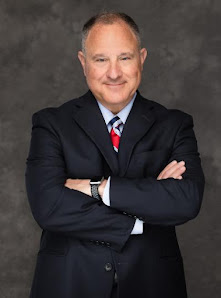
A Pennsylvania man was arrested Thursday on charges alleging that he tortured a victim in the Kurdistan region of Iraq in 2015, after a superseding indictment was returned in the Middle District of Pennsylvania, reported Jurist.

The grand jury charged Ross Roggio, 53, of Stroudsburg with directing and participating in the systematic torture of an employee over the course of 39 days with Kurdish soldiers in Iraq. He was charged with suffocating the victim with a belt, threatening to cut off one of the victim’s fingers and directing Kurdish soldiers to inflict severe physical and mental pain and suffering.

According to the superseding indictment, Roggio was managing a project in 2015 to construct a factory to produce weapons in the Kurdistan region of Iraq. When an employee of Roggio raised concerns about the weapons project, Roggio arranged for Kurdish soldiers to abduct the employee to prevent any interference with the project. The employee was then detained at a Kurdish military compound for 39 days, where he was interrogated and tortured by Roggio and Kurdish soldiers.

Roggio and the Roggio Consulting Company LLC were also charged in a 37 count-indictment in 2018 for illegally exporting firearms parts and tools from the US to Iraq as a part of Roggio’s weapons project. The superseding indictment adds torture charges and conspiracy to commit torture to these previous charges.

In response to the indictment and arrest, Assistant Director Luis Quesada of the FBI’s Criminal Investigative Division said, “The heinous acts of violence that Ross Roggio directed and inflicted upon the victim were blatant human rights violations that will not be tolerated.” Special Agent in Charge Jacqueline Maguire of the FBI’s Philadelphia Field Office added, “Whether in the United States or on foreign soil, heinous acts like torture violate our laws.”

If convicted, Roggio faces a maximum 20-year sentence for each torture charge and a maximum total statutory penalty of 705 years in prison for the additional 37 counts. A federal district court judge will determine his sentence.

To read more CLICK HERE


Saturday, January 14, 2017

GateHouse: A farewell and a warning

Matthew T. Mangino
GateHouse Media
January 13, 2017
This week President Barack Obama gave his farewell address. Presidential historian Douglas Brinkley described the run up to the speech as "the most highly publicized farewell address in American history."
That is no surprise. The most famous of all presidential farewells was that of George Washington. The father of our country didn't actually make a speech, but his words helped shape the country we have today.
Washington used the 32-page address, published on Sept. 19, 1796, to explain his "rationale for leaving the presidency, despite pressure from the public and others in government to seek a third term in office," reported History.com. That decision set a precedent that was followed until Franklin D. Roosevelt ran for a third and fourth term during World War II. More importantly, the decision protected America from the dangers of tyranny.
President Obama may have viewed his speech as doing the same when he said, "Democracy can buckle when it gives in to fear."
Another poignant passage of his speech was when he spoke of the U.S. Constitution. "Our Constitution is a remarkable, beautiful gift ... But it's really just a piece of parchment. It has no power on its own. We, the people, give it power. We, the people, give it meaning - with our participation, and with the choices that we make and the alliances that we forge."
However, if recent history is any measure, Americans are more apt to surrender their liberties than fight to protect them. For instance, the price of falling crime rates. Experts may not say it and the average American may not admit it, but decreasing crime rates have come at a precious cost - the sacrifice of personal liberty.
We have altered our lifestyles and fortified our homes in the name of security. Homes and businesses across the country have taken measures to become more secure. What was once considered extreme is now commonplace - security systems, spot lights, motion detectors, metal gates over front doors, video surveillance, car alarms, mace, pepper spray, stun guns, handguns, personal self-defense training, even architectural design with crime prevention in mind.
In America, citizens have also passively watched their constitutional rights disappear in the service of security, largely without protest and often while still celebrating the land of the free and the home of the brave, suggested Peter Van Buren, author and former member of the United States Foreign Service, in Mother Jones.
In the 1960s, the Warren Court, fearing new forms of surveillance, expanded the protections of the Fourth, Fifth and Sixth Amendment. Those decisions dealing with pre-arrest detention, right to counsel, Miranda and the exclusionary rule were recognized as fundamental rights.
The post-Warren Courts, due to their concerns about rising crime rates, limited those protections. As it has in the past, the debate over the interpretation of the Constitution will continue to be a point of contention and be "subject to change based on the shifting social and political views of the members of the Supreme Court," wrote Orin Kerr on the SCOTUSblog.
President Obama's warnings are relevant, but may be too little too late. With regard to the ever-shrinking protections of the Constitution, President-elect Donald Trump will make at least one appointment to the Supreme Court and that appointment will shift the balance of power and the "social and political views" of the court.
More importantly, Obama's warnings are, in some ways, contrary to the policies he continued or adopted as president. During his presidency, due process was manipulated in a way that seemed to authorize torture, indefinite detention without charge and even government-sponsored murder of American citizens. As Van Buren wrote, "Torture morphs into acceptable enhanced interrogation techniques, indefinite detention acquires a quasi-legal stance with the faux-justice of military tribunals, and the convenient murder of a citizen is turned into an act of 'self-defense.'"
With the inauguration of a new president only days away, will the emasculation of the due process continue?
Matthew T. Mangino is of counsel with Luxenberg, Garbett, Kelly & George P.C. His book "The Executioner's Toll, 2010" was released by McFarland Publishing. You can reach him atwww.mattmangino.com and follow him on Twitter @MatthewTMangino.
To visit the column CLICK HERE


Thursday, November 10, 2016

Will President Trump bring back waterboarding and a 'hell of a lot worse'?

Sen. Tom Cotton (R-Ark.) said that President-elect Donald Trump is ready to make “tough calls” if it comes to waterboarding terrorism suspects, reported The Hill.
“If experienced intelligence professionals come to the president of the United States and say, 'We think this terrorist has critical information and we need to obtain it and this is the only way we can obtain it,' that’s a tough call,” Cotton said on CNN's “The Situation Room.” 
“But the presidency is a tough job, and if you’re not ready to make those tough calls then you shouldn’t seek the office. Donald Trump’s a pretty tough guy, and I think he’s ready to make those tough calls.”
Trump said during the campaign he would bring back waterboarding and a “hell of a lot worse” to interrogate suspected terrorists.
Waterboarding is banned by international law and has been banned by U.S. law under an annual defense policy bill that includes a provision barring brutal interrogation techniques widely classified as torture.
To read more CLICK HERE

Friday, March 18, 2016

Trump on torture: 'You bet your ass I would—in a heartbeat'

Donald Trump stated unequivocally that he would bring back torture, according to The Nation. “Would I approve waterboarding?” he told a cheering crowd at a November rally in Columbus, Ohio. “You bet your ass I would—in a heartbeat.” And for Trump, that would only be the beginning. He assured his listeners, vaguely but emphatically, that he “would approve more than that,” leaving to their imaginations whether he was thinking of excruciating “stress positions,” relentless exposure to loud noise, sleep deprivation, the straightforward killing of prisoners, or what the CIA used to delicately refer to as “rectal rehydration.” Meanwhile, he just hammers on when it comes to torture. “Don’t kid yourself, folks. It works, okay? It works. Only a stupid person would say it doesn’t work.”
Only a stupid person—like, perhaps, one of the members of the Senate Intelligence Committee who carefully studied the CIA’s grim torture documents for years, despite the Agency’s foot-dragging, opposition, and outright interference (including computer hacking)—would say that. But why even bother to argue about whether torture works? The point, Trump claimed, was that the very existence of the Islamic State means that someone needs to be tortured. “If it doesn’t work,” he told that Ohio crowd, “they deserve it anyway.”
Only a few days later, he triumphantly sallied even further into war criminal territory. He declared himself ready to truly hit the Islamic State where it hurts. “The other thing with the terrorists,” he told Fox News, “is you have to take out their families, when you get these terrorists, you have to take out their families. They care about their lives, don’t kid yourself. When they say they don’t care about their lives, you have to take out their families.” Because it’s a well-known fact—in Trumpland at least—that nothing makes people less likely to behave violently than murdering their parents and children. And it certainly doesn’t matter, when Trump advocates it, that murder is a crime.
To read more CLICK HERE

Thursday, December 11, 2014

GateHouse: UN takes a swipe at torture in America

Matthew T. Mangino
GateHouse Media
December 10, 2014

This week, the Senate Intelligence Committee released the results of a five-year investigation of CIA interrogation methods used on terrorism suspects after the 9/11 attacks.

According to USA Today, the investigation concluded that the interrogations were more brutal than the CIA had previously admitted. Committee chairwoman Sen. Dianne Feinstein said in some cases, the conduct amounted to “torture.”

With a “little” less fanfare, the United Nations Commission Against Torture recently released a report on the United States’ involvement in questionable conduct that the Senate Intelligence Committee seemed to confirm.

Not surprisingly, the report referenced the use of extraordinary rendition, enhanced interrogation techniques, overseas torture and issues relating to the detainees at Guantanamo Bay.

A closer look at the U.N. report reveals some concern about issues closer to home. The 15-page report released by the Committee Against Torture suggests a link between torture and U.S. policies regarding the death penalty, juvenile life without parole, excessive use of force by police and solitary confinement.

Regarding the issue of solitary confinement the U.N. raised concerns about extensive use of solitary confinement and other forms of isolation in U.S. prisons “for purposes of punishment, discipline and protection, as well as for health-related reasons.”

Although the U.N. did not recommend the complete abolition of solitary confinement the report did recommended only using “solitary confinement as a measure of last resort, for a (sic) short time as possible, under strict supervision.”

A new report from the University of North Carolina School of Law suggests that long-term solitary confinement is a cruel, inhumane and degrading form of punishment. The report, “Solitary Confinement as Torture,” contends that solitary confinement as a form of punishment is “beyond the bounds of human decency.”

Next, the U.N. took up the issue of juvenile life without parole. The U.N. applauded the U.S. Supreme Court decisions eliminating life for juveniles convicted of non-homicide offenses and a more recent decision abolishing mandatory life without parole for juveniles.

The report expressed dismay regarding a half-dozen states that have ruled that the latter decision does “not apply retroactively, and that a majority of the 28 states that required mandatory life sentences without the possibility of parole for children have not passed legislation” to prohibit the practice.

Beyond those concerns, the U.N. has called on the U.S. to “abolish the sentence of life imprisonment without parole for offences committed by children under 18 years of age,” regardless of the crime.

With the police-related deaths of Michael Brown in Missouri and Eric Garner in New York, the U.N. committee made a broad statement concerning “the frequent and recurrent police shootings or fatal pursuits of unarmed black individuals.”

Earlier this year, USA Today reported that nearly two times a week in the United States, a white police officer killed a black person during a seven-year period ending in 2012. The data was from the most recent accounts of justifiable homicide reported to the FBI. On average, there were 96 such incidents among at least 400 police killings each year that were reported to the FBI by local police.

The U.N. recommended that “police brutality and excessive use of force by law enforcement officers are investigated promptly, effectively and impartially by an independent mechanism.
Finally, the U.N. committee recommended the abolition of the death penalty. The U.N. suggested that the death penalty is torture, because it inherently includes “the threat of imminent death.” The committee also condemned lethal injection as cruel and unusual punishment.

The U.S. Supreme Court disagrees on the death penalty, and has consistently made rulings contrary to the position of the U.N. on domestic issues of punishment and accountability.

Matthew T. Mangino is of counsel with Luxenberg, Garbett, Kelly & George. His recent book, “The Executioner’s Toll, 2010,” was released by McFarland Publishing. You can reach him at mattmangino.com and follow him on Twitter at @MatthewTMangino.

Visit the Column

Sunday, December 7, 2014

UN Committee on Torture challenges U.S. death penalty

Last month the United Nations addressed the death penalty in the United States, first citing concerns and then recommending changes. The UN Committee Against Torture included the following in its report:

While welcoming that six states have abolished capital punishment during the period under review, the Committee expresses its concern at the State party’s admission that it is not currently considering abolishing the death penalty at the federal level. It also expresses its concern at reported cases of excruciating pain and prolonged suffering that procedural irregularities have caused to condemned prisoners in the course of their execution. The Committee is specially troubled by the recent cases of botched executions in Arizona, Oklahoma, and Ohio. The Committee is equally concerned at the continued delays in recourse procedures which keep prisoners sentenced to death in a situation of anguish and incertitude for many years. The Committee notes that in certain cases such situation amounts to torture in so far as it corresponds to one of the forms of torture (i.e. the threat of imminent death) contained in the interpretative understanding made by the State party at the time of ratification of the Convention (arts. 1, 2 and 16).
The State party (United States) should review its execution methods in order to prevent pain and prolonged suffering. The Committee recalls that according to the Safeguards guaranteeing protection of the rights of those facing the death penalty (approved by Economic and Social Council resolution 1984/50 of 25 May 1984), where capital punishment occurs, it shall be carried out so as to inflict the minimum suffering.