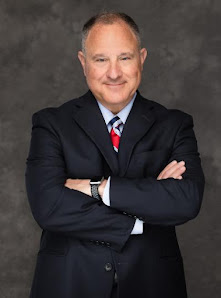
Watch my interview with Lindsay McCoy on WFMJ-TV21 about the Tepe murders in Columbus, Ohio.
To watch the interview CLICK HERE
* Criminal Defense Attorney * Former Prosecutor * Former Parole Board Member * 724-658-8535
Watch my interview with Lindsay McCoy on WFMJ-TV21 about the Tepe murders in Columbus, Ohio.
Here is a block of news worth reading from The Marshall Project:
When is
deadly police force justified? Police officers are taught not to fire
their weapons into vehicles. ICE agents haven’t had the same training. Mother Jones Federal immigration agents have shot into
vehicles at least 13 times since July. The Wall Street Journal As protests against ICE agents
grow, ICE officials tell agents to take “appropriate and decisive” action
against perceived threats. The New York Times Even before Renee Good was named,
the Trump administration began re-writing the history of her killing. Wired This isn’t a new problem. In the past, federal
immigration agents have intentionally stepped in front of moving vehicles to
justify shooting at drivers. The Nation TMP Context: Use of force by ICE
agents. The Marshall Project
Fingerprints
have long been considered the gold standard of crime investigation techniques.
As early as 1903, America — with its new young president and former New York
City police commissioner Teddy Roosevelt — began using fingerprints in criminal
investigations. Fingerprint analysis became a "thing" back in the
mid-18th century in India.
Within a
couple of decades, the FBI began cataloging fingerprints. Today, the bureau is
storing more than 200 million fingerprints.
Until
recently, the FBI described fingerprint identification as 100% infallible. That
is no longer the case. In the last twenty years, there hasn't been a lot of
good news when it comes to forensic analysis, including fingerprint analysis.
What do we
know about fingerprints? Impressions of fingerprints are left behind on various
surfaces by the natural secretions of sweat. The friction ridges, the raised
portion of the epidermis on fingers consisting of one or more connected ridges,
are often the point of comparison.
First, an
intentional recording of the fingerprint is made with black ink on a white card
or recorded digitally. These are often collected after arrest and secured in a
database. At a crime scene a "latent print," the chance recording of
a fingerprint deposited on a surface, is captured through chemical methods and
brought into a lab for expert analysis.
Fingerprint
identification came under scrutiny in 2004. The FBI publicly acknowledged the
fingerprint misidentification of an Oregon lawyer wrongfully implicated in a
terrorist bombing in Madrid — a place he had never visited.
Through a
study conducted in 2004, cognitive neuroscientist Itiel Dror found that
otherwise competent and well-meaning experts were swayed by what they knew
about a case submitted for analysis. Dror's study demonstrated that if an
analyst knew that the suspect confessed or was arrested, the analyst's findings
could be influenced. According to Frontline, cognitive bias seeped into the
process even with the best-trained experts.
In steps
deep learning, the use of multi-layered artificial intelligence to
automatically learn complex patterns from vast amounts of data.
A recent
study published in Science Advances entitled "Unveiling intra-person
fingerprint similarity via deep contrastive learning" revealed a
breakthrough in fingerprint analysis.
Law
enforcement agencies worldwide have operated under the long-standing belief
that no two fingerprints are alike, even across the ten fingers of a single
individual.
The
authors suggest that an investigator can sidestep the same-finger limitation by
exploiting nontraditional fingerprint features. "Past studies provided
evidence that fingerprint patterns may be partially genetically determined
which implies that there could be similarities among fingerprints from the same
person," the authors found.
In
addition, "recent research shows that partial fingerprints from different
users have common features that can be exploited to fool authentication
systems."
The study
concluded, "the ability to process and match distinct fingerprint samples
from the same individual opens new investigative possibilities, particularly in
cases where fingerprints are partial or collected under suboptimal
conditions."
This
breakthrough moves investigators away from matching the best print with the
exact finger of a suspect. The study found, "The new AI model reduces this
dependency by identifying shared features that remain stable across different
fingers."
How does
fingerprint evidence get in front of a jury?
Specialized
rules of evidence allow expert testimony if the conclusions are based on
knowledge, skill, experience, training or education in the techniques involved
and the specialized knowledge will assist the judge or jury to understand the
evidence or to determine a fact in issue. The testimony must be based on
reliable principles and methods, consistently applied.
Here is
the new dilemma. If Artificial Intelligence is used to determine a fingerprint
match, how does the expert witness convey the process of using AI to evaluate
the evidence? This information is crucial to whether a judge allows the
expert's opinion and whether the opinion helps jurors understand the
reliability of evidence.
Matthew T.
Mangino is of counsel with Luxenberg, Garbett, Kelly & George P.C. His book
The Executioner's Toll, 2010, was released by McFarland Publishing. You can
reach him at www.mattmangino.com and follow him on Twitter @MatthewTMangino
To visit Creators CLICK HERE
Minnesota state officials have urged the FBI to bring them back into the fold on an investigation into the shooting by an ICE agent of Renee Good, reported Minnesota Public Radio.
Minnesota's
Bureau of Criminal Apprehension was initially working in tandem with the FBI
after an ICE officer killed the 37-year-old Good. But reversed
course, saying it has sole authority.
Minnesota
Department of Public Safety Commissioner Bob Jacobson said that could hamper a
state investigation and possible prosecution.
“Unless we
do that thorough investigation, unless we have access to all of that evidence,
unless we have access to the agents that were involved in that, to any
witnesses, without any of that, we would not be able to put together a quality
investigation for any prosecutor to be able to make a determination as to
whether or not someone should be charged with a crime,” he said.
Jacobson
and Gov. Tim Walz urged the Trump administration to allow state and local law
enforcement officers to participate in the investigation to ensure public trust
in its results.
“Use our
professional folks. They will gain you the credibility and the trust of
Minnesotans to believe the work that you're doing is honest and it's not just a
whitewashed to back fill a preconceived notion,” Walz said.
Hennepin
County Attorney Mary Moriarty said Thursday that her office began exploring
options available to ensure a state-level investigation could move forward.
“If the
FBI is the sole investigative agency, the State will not receive the
investigative findings, and our community may never learn about its contents,”
Moriarty said in a statement. “We are speaking to our local partners on paths
forward that will allow us to review the investigation and be transparent in
our decision making."
To read more CLICK HERE
As the airwaves are flooded with government propaganda about the homicide of Renee Nicole Good at the hands of an ICE agent in Minneapolis, we are reminded that sometimes propaganda backfired on even the master purveyors of deceit.
Hessy Levinsons Taft, who as an infant appeared on the cover of a Nazi magazine in Germany promoting her as the ideal Aryan baby, a distinction complicated by the fact that she was Jewish and had been exploited as part of a dangerous hoax, died on Jan. 1 at her home in San Francisco. She was 91.
Her death
was confirmed by her family, reported The New York Times.
Terrifying
at first, the story eventually became a source of pride for Mrs. Taft and her
parents for the way it neatly illustrated the absurd pseudoscience underlying
Adolf Hitler’s racial ideology.
“I feel a
sense of revenge,” she said much later. “Good revenge.”
The
episode began in 1934, when Hessy was 6 months old and her parents, Latvian
opera singers living in Berlin, hired the well-known photographer Hans Ballin
to take her portrait.
After
framing the photo, her parents displayed it on their piano. One day, the woman
who cleaned their home noticed it and told Hessy’s mother that she had seen her
daughter on the cover of a magazine.
“My mother
thought surely she must be mistaken, that there are many babies that look
alike, and just told her, ‘Well, that couldn’t be the case,’” Mrs. Taft said in
an interview with the United States Holocaust Memorial
Museum in 1990.
The woman
insisted that it was the same baby. “Just give me some money,” she said, “and
I’ll get you the magazine.”
Soon she
returned with a copy of Sonne ins Haus, or Sun in the Home, one of several
pro-Nazi magazines that were allowed to circulate in the country after Hitler
had shut down thousands of other publications. And there, on the cover, was the
portrait from the piano.
Hessy’s
mother flipped through the pages.
“On the
inside of the magazine were pictures of the army with men wearing swastikas,”
Mrs. Taft told the Holocaust museum. “My parents were horrified.”
Her mother
went to Mr. Ballin’s studio and showed him the magazine. “What is this?” she
said. “How did this happen?”
He told
her that the Nazis had invited him to submit photos for a contest to find a
baby representing the epitome of the Aryan race, and Hessy was among those he
included in his submission. Joseph Goebbels, the Nazi minister of public
enlightenment and propaganda, chose the winner.
To read more CLICK HERE
A federal immigration operation in Minneapolis turned deadly this week when a U.S. Immigration and Customs Enforcement officer shot and killed 37-year-old Renee Good during a confrontation involving her vehicle, reported The Associated Press.
Cellphone
video captured the shooting, which federal officials claimed was an act of self-defense but that the city’s mayor
described as “reckless” and unnecessary. Video shows an ICE officer approaching
Good’s SUV stopped in the road as the vehicle begins to move forward. Another
ICE officer standing in front of it draws his gun and fires at close range as
he jumps out of the way.
Here's
what to know about regulations on using deadly force in these situations:
When can
officers fire at a moving vehicle?
There is
no universal training standard for law enforcement. But most police departments
and federal guidance bar shooting at a moving vehicle unless the driver poses
an imminent threat of deadly force beyond the car itself.
Why are
shootings at vehicles restricted?
Experts
say firing at a moving car is one of the riskiest forms of lethal force,
increasing the chance of stray gunfire or a loss of vehicle control that can
endanger bystanders.
Are
officers expected to move out of the way?
Yes.
Justice Department policy says deadly force is allowed only when no reasonable
alternative exists, including stepping out of the vehicle’s path.
Can
officers use deadly force just to stop or arrest someone?
No.
Policies generally state officers cannot use deadly force solely to arrest
someone or to disable a fleeing vehicle if the person does not pose an
immediate threat.
Do federal
immigration agents follow different rules?
Not
fundamentally. ICE and other federal officers operate under similar Justice
Department guidance limiting gunfire at vehicles, although federal agents have
added legal protections when acting within their official duties.
What is
ICE's policy?
The
Department of Homeland Security, which oversees ICE, allows deadly force only
when an officer reasonably believes someone poses an imminent threat of death
or serious injury.
Who
investigates these shootings?
Federal
agencies conduct internal reviews, and state and local authorities may also
pursue criminal investigations. Federal agents are not immune from prosecution
if they act outside their authority. The FBI is leading the investigation into
the Minneapolis shooting.
To read more CLICK HERE
Israeli
billionaire Shlomo Kramer recently suggested on CNBC's "Money Movers"
that governments must restrict freedom of speech in the age of Artificial
Intelligence."
You're
seeing the polarization in countries that allow for the First Amendment and
protect it, which is great. And I know it's difficult to hear, but it's time to
limit the First Amendment in order to protect it," he said.
Kramer was
speaking, generally, of countries that protect freedom of speech and expression
in their constitutions and not just America's First Amendment.
The First
Amendment to the United States Constitution was ratified, along with nine other
amendments to the U.S. Constitution referred to as the Bill of Rights. The
First Amendment reads:
"Congress
shall make no law respecting an establishment of religion, or prohibiting the
free exercise thereof; or abridging the freedom of speech, or of the press; or
the right of the people peaceably to assemble, and to petition the Government
for a redress of grievances."
Those 45
words lay the groundwork for some of our most cherished and fundamental rights
— freedom of religion, freedom of speech, freedom of the press and the right to
assemble.
In 1919,
U.S. Supreme Court Justice Oliver Wendell Holmes established the
clear-and-present-danger test: "whether the words used are used in such
circumstances and are of such a nature as to create a clear and present danger
that they will bring about the substantive evils that Congress has the right to
prevent." This is the opinion where Holmes declared the now-famous example
of unprotected speech — falsely crying "fire" in a crowded theater.
So,
clearly not all speech is protected under the First Amendment. The First
Amendment does not simply say that if words are involved, you cannot be held
responsible for their consequences.
The First
Amendment restricts government censorship, not rules set by private companies
or employers. That means private platforms, employers, or TV networks can set
their own rules about what employees or users can say, as long as those rules
are made free from government interference or pressure.
Recently,
late-night host Jimmy Kimmel was temporarily taken off the air after the
government threatened to retaliate against ABC, his employer. Federal
Communications Commission Chairman Brendan Carr criticized one of Kimmel's
monologues about the killing of conservative influencer Charlie Kirk.
Carr
specifically called on ABC affiliates to inform ABC that they would not carry
Kimmel's show and pointed out the power that the FCC has over the broadcasting
licenses of the affiliates.
Kimmel's
show was pulled. The public was outraged. A private company has the right to
control the speech of its employees without triggering the First Amendment. If
the government coerces a private company to control speech, the First Amendment
is violated.
What
exactly is Kramer proposing to control — hate speech, disinformation or
unflattering thoughts about government leaders?
Can the
government punish hate speech?
The U.S.
Supreme Court has said "no." In 2017, in a decision striking down a
federal law banning disparaging trademarks, Justice Samuel A. Alito Jr. said
the government had no business "preventing speech expressing ideas that
offend."
Can the
government prohibit speech that causes distress?
The
Supreme Court again said "no." Courts would not stop a planned march
by the American Nazi Party in Illinois in 1977, though it would have been
deeply distressing to the many Holocaust survivors who lived there.
The First
Amendment does not protect incitement of violence, but even there, the Supreme
Court defined the prohibition very narrowly, requiring a likelihood of imminent
violence.
Limiting
online speech is a slippery slope. Striking a balance between removing harmful
content and protecting legitimate expression is difficult at the very least.
Maybe, more importantly, in our current political climate, the regulation of
any speech could be used to silence dissent and suppress the marginalized.
Matthew T.
Mangino is of counsel with Luxenberg, Garbett, Kelly & George P.C. His book
The Executioner's Toll, 2010, was released by McFarland Publishing. You can
reach him at www.mattmangino.com and follow him on Twitter @MatthewTMangino
To visit Creators CLICK HERE
Gov. Josh
Shapiro has quietly issued a reprieve to a Pennsylvania inmate on death row.
This was
the first reprieve of Shapiro's tenure and, although inconsistent with the
actions of a number of other state executives, should not come as a surprise.
Soon after he took office, Shapiro called on
the legislature to repeal the death penalty. He said that his time as
attorney general "revealed two undeniable truths about our capital
sentencing system: that it is inherently fallible and that its consequences are
irreversible."
In his
reprieve, he wrote that although those sentenced to death
"have committed the most terrible crimes and deserve to spend the rest of
their lives behind bars," the commonwealth "should not be in the
business of executing people."
Shapiro's
position stands out in comparison to politicians who use the death penalty as a
prop to promote or tout their "tough on crime" bona fides.
There were
47 executions in the United States last year — the most since 2010, the year I
chose to examine all the executions across the country in my book, "The Executioner's Toll, 2010."
Maybe
Donald Trump's executive order on the first day of his current term has
had an impact on state-sponsored death. The order established that "It is
the policy of the United States to ensure that the laws that authorize capital
punishment are respected and faithfully implemented, and to counteract the
politicians and judges who subvert the law by obstructing and preventing the
execution of capital sentences."
At least
one Trump adherent took the machinery of death and ran with it. Florida's
Gov. Ron
DeSantis has presided over a record-breaking surge in capital punishment — 19
executions last year.
Even the
U.S. Supreme Court seems poised to expand the application of the death penalty.
Not to mention, the Court denied every request to stay an execution
in 2025.
In 2002,
the Supreme Court ruled in Atkins v. Virginia that the Eighth Amendment
to the U.S. Constitution bans, as cruel and unusual punishment, the execution
of people who are intellectually disabled. The Court is poised to whittle away
at its prior ruling.
Florida's
Supreme Court recently upheld a 2023 state law allowing nonunanimous
juries to sentence people to death. Florida law permits capital punishment with
a jury recommendation of 8-4 in favor of death, the lowest standard in the
nation.
Methods of
execution were also controversial. Louisiana adopted nitrogen gas as a method of execution and
South Carolina adopted — and used — the firing squad in 2025.
What
explains the increase in executions?
Probably
not public support. Recent
polls show about half of Americans favor executions, but the best
evidence of what people really think is found in courtrooms, where jurors have
increasingly rejected the punishment.
Only 27
states, the federal government and the U.S. military, still allow the death
penalty. This year, prosecutors in just 11 of those states sought the death
penalty against a total of 51 people, according to the Death Penalty Information Center. Jurors
chose to send just 23 people to death row. Two-thirds of those death
sentences came from only three states — Alabama, California, and
Florida. To add some perspective, in 1996 alone 315 people were sentenced to
death in the United States.
"The
increase in this year's execution numbers was caused by the outlier state of
Florida, where the governor set a record number of executions," said Robin Maher, Executive Director of the Death Penalty
Information Center. "The data show that the decisions of Gov.
DeSantis and other elected officials are increasingly at odds with the
decisions of American juries and the opinions of the American public."
Matthew T.
Mangino is of counsel with Luxenberg, Garbett, Kelly & George P.C., New
Castle, Pennsylvania. He is a frequent contributor to Law & Crime
News. His book "The Executioner's Toll, 2010" was released by
McFarland Publishing. You can follow him on X @MatthewTMangino.
To visit Law & Crime News CLICK HERE
Nicolas Maduro, the president of Venezuela captured in a U.S. military raid, faces criminal charges in Manhattan, where federal prosecutors have targeted him for years, reported Reuters.
Here is a
recap of the indictment unsealed on Saturday against Maduro, his wife, his son,
and other co-defendants.
WHAT
CHARGES DOES MADURO FACE?
The indictment,
opens new tab alleged Maduro and other Venezuelan leaders have, for
more than 25 years, "abused their positions of public trust and corrupted
once-legitimate institutions to import tons of cocaine into the United
States."
The
indictment alleged Maduro and his allies “provided law enforcement cover and
logistical support” to major drug trafficking groups, such as the Sinaloa
Cartel and Tren de Aragua gang. These criminal organizations sent profits to
high-ranking officials who protected them in exchange, the Justice Department
said.
Among
other specific acts, Maduro is accused of selling Venezuelan diplomatic
passports to known drug traffickers and facilitating flights under diplomatic
cover to bring drug proceeds back from Mexico to Venezuela.
Maduro was
indicted on four counts: narco-terrorism conspiracy, cocaine importation
conspiracy, possession of machine guns and destructive devices and conspiracy
to possess machine guns and destructive devices.
The case
was brought by the U.S. Attorney's Office for the Southern District of New
York, an office within the Justice Department famous for its fierce
independence and aggressive prosecutions.
The same
prosecutor's office returned an indictment against Maduro in 2020, with the
same four charges. The updated indictment made public on Saturday adds some new
details and co-defendants, including Maduro's wife, Cilia Flores.
The first
lady is accused of ordering kidnappings and murders, as well as accepting
bribes in 2007 to arrange a meeting between drug traffickers and the director
of Venezuela’s National Anti-Drug Office.
WHAT COMES
NEXT IN THE CRIMINAL CASE?
Maduro is
expected to make an initial appearance in court on Monday. A judge will likely
advise him of the charges against him and ensure he has a defense lawyer.
It could
be several months or even more than a year before Maduro stands trial.
Prosecutors could eventually offer a plea deal to avoid a trial.
Maduro's
case is expected to be overseen by U.S. District Judge Alvin Hellerstein
because he was assigned to the 2020 case brought against Maduro.
The
92-year-old jurist who has been skeptical of arguments by U.S. President Donald
Trump's administration in other high-profile cases. Earlier this year,
Hellerstein rejected efforts to deport alleged Venezuelan gang members under
the Alien Enemies Act, saying the wartime law had been improperly invoked by
the Trump administration.
WHAT
DEFENSES WILL MADURO RAISE?
As the
case unfolds, Maduro is likely to argue to seek dismissal on the grounds that
he is immune, or shielded, from criminal prosecution because he is a foreign
head of state.
Judges
have in some contexts concluded that foreign officials enjoy immunity from
legal claims in U.S. courts.
But Maduro
faces an uphill battle with this argument because of a historic precedent: the
U.S. invasion of Panama in 1989 that ousted the country's leader, Manuel
Noriega.
Like
Maduro, Noriega was accused of conspiring to smuggle drugs into the U.S., and
was captured in a military raid in his home country.
U.S.
courts rejected Noriega's immunity argument, showing deference to the U.S.
government's assertion that he was not Panama's legitimate leader. Legal
experts have said that precedent will likely undermine Maduro's efforts to get
charges dismissed.
Maduro is
also likely to invoke a legal doctrine that says criminal charges should be
dismissed if prosecutors brought them vindictively or selectively. He might
also argue that claims against him are time-barred, meaning they are too old to
be pursued in court.
Federal
conspiracy charges generally have a five-year statute of limitations, meaning
charges must be brought within five years of the alleged crime's completion,
with some exceptions.
To read more CLICK HERE
States are moving in sharply different directions on the death penalty, with some looking to broaden when and how executions occur while others try to scale them back or end them entirely, reported Stateline.
Lawmakers
in more than half of the states have introduced over 100 bills this year to either expand
or limit capital punishment, to alter execution protocols, and to change how
death sentences are imposed, according to the Death Penalty Information Center,
a nonprofit that studies capital punishment. The group does not take a position
on the death penalty, but it is critical of how it is carried out.
Some of
the bills seeking to expand the death penalty would have included crimes that
have been hot-button issues, such as the killing of police officers, sexual
offenses against children, abortion and crimes committed by people living in
the country illegally. Lawmakers in at least seven states this year also have
attempted to legalize alternative methods of execution.
Earlier in
the year, however, some Republican legislators
in conservative states — including Indiana, Kansas, Kentucky, Ohio and Oklahoma
— proposed measures to abolish the death penalty or impose moratoriums to halt
pending and future executions. None of those efforts advanced through their legislatures.
Georgia,
meanwhile, enacted a law barring the execution of people with intellectual
disabilities.
To read more CLICK HERE
President Trump announced that U.S. forces had carried out “a large scale strike against Venezuela” and were flying President Nicolás Maduro and his wife out of the country. The Trump administration had been building pressure on Mr. Maduro for months, reported The New York Times.
To read more CLICK HERE
Here are the Supreme Court cases to watch in 2026, according to Axios:
Birthright
citizenship
The
Supreme Court will likely decide Trump's executive order ending birthright citizenship in early 2026 in Trump v. Barbara.
Driving
the news: Upholding Trump's order, which seeks to bar children of undocumented immigrants born in the U.S.
from citizenship, would overturn a right guaranteed by the 14th Amendment and upheld by the
court for more than a century.
Trump's
order was quickly met with legal challenges, and several courts temporarily halted its
implementation.
Flashback: The
administration argues birthright citizenship applies only to formerly enslaved
people who were granted citizenship under the 14th Amendment after the Civil War.
Michael
LeRoy, an immigration law expert at the University of Illinois at
Urbana-Champaign, previously told Axios' Avery Lotz that it's impossible to
predict how SCOTUS will rule — but a decision in Trump's favor could have
sweeping implications for other constitutional protections.
Trump's tariff case
SCOTUS
will decide the legality of Trump declaring a national emergency to impose
sweeping tariffs on foreign goods without congressional approval, in what he
has called the "most important case ever" in Learning Resources v. Trump.
State of
play: A ruling against Trump could force the government to refund more
than $100 billion in tariffs already collected and curtail his ability to use
declared emergencies to enact his economic agenda.
Trump has
repeatedly claimed tariff revenue will help pay down the national debt,
bankroll aid to farmers and cover the cost of his new "warrior dividend" — a one-time $1,776 bonus for roughly
1.45 million service members — even though the bonus is actually being paid out
of previously approved Pentagon housing funds, not tariffs.
Yes, but: The
president has argued his far-reaching tariffs create jobs and boost U.S.
manufacturing, claims many economists dispute. Economists also worry the government might
ultimately have to return the tariff revenue.
In recent
weeks, companies including Costco, Revlon, Bumble Bee Foods and the maker of
Ray-Ban have sued, seeking refunds if the justices ultimately strike
down the tariffs.
What
Trump's saying: "Evil, American hating Forces are fighting us at the
United States Supreme Court," Trump said in Truth Social post in November.
"Pray
to God that our Nine Justices will show great wisdom, and do the right thing
for America!"
Banning conversion therapy
SCOTUS is
expected to rule on a case challenging bans on LGBTQ+ conversion therapy for minors — a discredited practice aimed at changing young people's
sexual orientations or gender identities in Chiles v. Salazar.
Zoom
out: The justices will decide whether therapists' conversations with
patients are protected by the First Amendment or considered medical treatment
that states can regulate.
LGBTQ+ advocates, major medical and mental health organizations have condemned conversion
therapy as harmful, discriminatory and ineffective.
Worth
noting: Twenty-three states had full bans on conversion therapy as of late
2025, with five states imposing a partial ban. Five states prohibit such bans,
while 18 have no restrictions.
Trans athletes in women's sports
SCOTUS
will hear arguments in two major cases — one from Idaho and another from West
Virginia — where states banned transgender athletes from participating in girls'
sports in West Virginia v. B.P.J. and Little v. Hecox.
Zoom in: The
court could decide Title IX, which prohibits sex discrimination in education
programs, does not protect transgender athletes competing in sports consistent
with their gender identity.
A decision
against the athletes would mark a major setback for the LGBTQ+ community,
adding to Trump's other 2025 actions to limit protections for transgender individuals.
The Voting Rights Act
The high
court appears poised to severely curtail Section 2 of the Voting Rights Act in
a decision that would reshape how legislative and congressional maps are
drawn nationwide and potentially reduce minority representation by significant
margins in Louisiana v. Callais.
Why it
matters: The case challenges a core provision of the Voting Rights Act that has created maps that allow
minority voters to elect their candidates of choice. Overturning it could allow
Republicans to lock in additional congressional and legislative seats across
the country.
The ruling
could make it significantly harder for minority voters to secure or maintain
electoral representation.
Campaign finance
SCOTUS
will rule on a Republican-backed challenge that aims to overturn decades-old
limits on how much political parties can spend in coordination with candidates in NRSC v. FEC.
What we're
watching: Election watchdogs warn that removing these limits would destroy
the few remaining firewalls between big money and candidates.
The case
would further remove campaign finance restrictions on how much an individual or
group can donate directly to a candidate, which provides a safeguard against
bribery or suspected corruption.
How it
works: Under current law, political action committees can raise unlimited
funds, but they can't coordinate with candidates.
Parties,
on the other hand, are limited in how much they can raise, but they are able to
cooperate with candidates.
Republicans
argue those limits violate the First Amendment by preventing parties from
supporting their nominees.
Firing independent agency heads
The
Supreme Court will decide whether Trump has the unilateral authority
to fire leaders of independent agencies in Trump v. Cook and Trump v. Slaughter.
The bottom
line: A ruling for Trump would overturn a 90-year-old precedent that shielded independent agency commissioners from
political firings.
Catch up
quick: The cases stem from Trump's attempted firing of Federal Reserve
governor Lisa Cook and his firings of FTC officials Rebecca Slaughter and Alvaro
Bedoya, who later resigned.
Trump said
their service at the agency was "inconsistent with my Administration's
policies," in a letter announcing the terminations.
Hawaii law prohibiting guns
SCOTUS
will rule on the legality of a Hawaii law that prohibits individuals from
carrying guns onto private property unless the owner gives explicit consent
in Wolford v. Lopez.
Hawaii's
list of "sensitive places," where firearms are banned, includes more
than 15 categories — places such as bars, beaches and banks — which plaintiffs
argue violates their 2nd Amendment rights.
Context: Hawaii
enacted the new restrictions in 2023 after the Supreme Court's Bruen decision, which held that the 2nd Amendment included
the right to carry in public.
California
has faced similar legal challenges after passing laws aimed at tightening
firearm restrictions on private property.
The
justices have agreed to consider only Hawaii's burden flipping provision,
which the Ninth Circuit Court of Appeals upheld, finding that the state's law
"falls well within the historical tradition," and not the broader
sensitive places restrictions as a whole.
To read more CLICK HERE
For months, Chancellor Berrong, a 26-year-old in prison for assault and kidnapping, has been trying to tell the authorities that he killed a man in a Mississippi jail seven years ago, reported The New York Times.
He told a
prison guard that he had information about the crime, attempted to confess to a
detective and gave a written confession to a prison warden, he said, but agents
with the Mississippi Bureau of Investigation, the state agency that typically
investigates in-custody deaths, took no action.
In
interviews, Mr. Berrong said that he attacked William Wade Aycock IV at the
request of a guard in 2018. That allegation is disputed by a former inmate, who
told reporters he overheard Mr. Berrong and others planning the assault to stop
Mr. Aycock from implicating a member of their gang in an unrelated crime.
Previous
reporting on the Rankin County Adult Detention Center, where Mr. Aycock died,
revealed that for years, guards relied on some inmates as an attack
squad to help keep order and to retaliate against troublemakers.
A review
of the initial investigation of the death reveals that the authorities took
steps that could have hindered a full accounting of what happened. Guards and
inmates cleaned the cell where Mr. Aycock died with bleach before the state
investigators arrived, according to four witnesses. In addition, the M.B.I.’s
investigation file contains no photos of the cell, no security camera footage
and no notes from interviews with inmates.
Days after
the death, M.B.I. agents and the state medical examiner determined that Mr.
Aycock died by accident after falling off his bunk bed — without documenting
the evidence that led them to this conclusion.
Mississippi
Today and The New York Times have uncovered evidence that supports Mr.
Berrong’s confession and suggests that the authorities ignored or destroyed
evidence that could have helped solve the case. His account is the latest
allegation of wrongdoing by law enforcement in Rankin County, a Jackson suburb
where sheriff’s deputies have been accused of torturing
suspected drug users.
Jason
Dare, the spokesperson and attorney for the sheriff’s department, said he had
forwarded reporters’ request for comment to the M.B.I. He declined to comment
further.
The
commissioner of the Mississippi Department of Public Safety, Sean Tindell, said
that the M.B.I. would reopen the case based on the new information.
Guards and
inmates at the Rankin County Adult Detention Center cleaned up the scene of Mr.
Aycock’s death before investigators arrived, according to four witnesses.Credit...Rory
Doyle for The New York Times
Mr.
Berrong, a member of the Latin Kings street gang with a long criminal record,
said that in June 2018, he yanked a sleeping Mr. Aycock off the top bunk in his
cell, slammed him to the floor and stomped on his head. He said he never
intended to kill the man, just to send him a message to keep his mouth shut.
Mr.
Berrong said he has come forward out of a sense of guilt.
For seven
years, he said, he had gotten away with the crime, in part because of missteps
in the investigation. Shortly after killing Mr. Aycock, he watched a group of
inmates and guards soak up the blood, which had spread past the cell door, and
douse the cell in bleach.
A former
inmate named John Phillips said he cleaned the cell before the M.B.I. arrived
and compared the scene to a horror film. Two former guards who spoke on the
condition of anonymity witnessed the cleanup and confirmed the former inmates’
accounts.
When the
investigators arrived, they were “angrily talking with each other about the
fact that the whole cell has been bleached,” Mr. Berrong said. “They said,
‘There’s nothing here.’”
The
M.B.I.’s investigative report on Mr. Aycock’s death, provided by Mr. Tindell,
makes no mention of the cleanup.
Mr.
Tindell said he spoke with the agent responsible for the report, who said he
did not recall the cell being cleaned or seeing men enter Mr. Aycock’s cell in
security camera footage. Mr. Tindell said the footage was not preserved by the
M.B.I.
The Rankin
County Sheriff’s Department declined to release investigative records related
to the case, citing a state law that allows police agencies to withhold such
materials.
The
M.B.I.’s file on the case amounts to a two-paragraph summary of the
investigation and the autopsy report. There are no photos or security camera
footage and no interview descriptions, even though several inmates said they
were interrogated by investigators.
“The
reporting at the time obviously left some things to be desired,” Mr. Tindell
said in an interview.
The Rankin
County Sheriff’s Department declined to release records related to the case,
citing a state law that allows police agencies to withhold such materials.Credit...Rory
Doyle for The New York Times
In the
years since he took over the department in 2020, the agency has improved its
record-keeping practices by “making sure that we had witness lists, that we had
narratives, that there was a narrative for everybody that you interviewed and
that supervisors had to review their work,” he said. “In this report, there’s
none of those things.”
Two days
after the M.B.I. filed its report concluding that Mr. Aycock had died from an
accidental fall, the Mississippi state medical examiner ruled his death an
accident.
Local
Investigations
This
article was reported and edited as part of the Local Investigations Fellowship, a New York Times program
where local reporters produce investigative work about their communities, and
supported in part by a grant from the Pulitzer Center.
Three
pathologists who reviewed the autopsy at the request of reporters said that
while it was reasonable to conclude he had died accidentally given what the
authorities knew at the time, Mr. Berrong’s account aligned with the injuries
recorded in Mr. Aycock’s autopsy.
Dr. Thomas
Andrew, the former chief medical examiner of New Hampshire, said that he would
have told the agents assigned to the case to investigate further before he
could reach a determination.
Details
missing from the report, like pictures of Mr. Aycock’s cell and security camera
footage, could have led examiners to a different conclusion, he said.
The M.B.I.
had an opportunity to reopen the case in 2022, when an inmate eyewitness told a
Rankin County Sheriff’s Department detective that he had seen Mr. Berrong and
another inmate leave Mr. Aycock’s cell moments before guards found him lying in
a pool of blood.
The
witness, who was being held in the jail in 2018, spoke to reporters on the
condition of anonymity, citing fears of retaliation from Mr. Berrong’s
associates.
The
detective relayed the information to an M.B.I. agent, the eyewitness said, but
the authorities never contacted him again. The witness said that he also wrote
a letter to the M.B.I. detailing what he had seen, and that his son called the
Rankin County District Attorney’s Office to report the information, but they
never heard back from the agencies.
To read more CLICK HERE