CREATORS
April 21, 2026
The U.S.
Supreme Court's favorable rating is at its lowest point since regular polling
of the court began in the early 1970s. Last year, the court's favorable rating
fell to 42 percent.
The modern
highwater mark for the court was 1999, when, according to Gallup, the court was
viewed favorably by 80% of Americans. Then the 2000 presidential election
rolled around and the high court ruled along partisan lines to award the
presidential election to George W. Bush over Al Gore.
The
Supreme Court has never rebounded. The high court has come under scrutiny,
while some of its members have become blatantly political. Justice Samuel Alito
flew an upside-down flag over his home and an "Appeal to Heaven" flag
over his vacation home — both with political implications. Justice Clarence
Thomas' wife has become an outspoken right-wing political operative.
Adam
Liptak and Jodi Kantor of The New York Times recently did an expose on the high
court's secret decisions — rulings with no explanation or reasoning — an
emergency docket rendering decisions in the shadow of the courtroom of the
Supreme Court's building.
According
to Liptak and Kantor, in 2016, several justices, including Chief Justice John
Roberts, were eager to block a major initiative of former President Barack
Obama. By a 5-to-4 vote along partisan lines, the Supreme Court halted the
Clean Power Plan, Obama's signature environmental policy. The decision
consisted of only legal boilerplate, without a word of reasoning — thus was
born the "Shadow Docket."
Could the
shadow docket be the product of conflicting personalities at the highest level
of government? Liptak and Kantor point out that Obama, as a United States
Senator, was one of just 22 senators to vote against Chief Justice Roberts's
confirmation. Obama said at the time, the nominee had "far more often used
his formidable skills on behalf of the strong in opposition to the weak."
As Liptak
and Kantor pointed out, traditionally the Supreme Court had "handled major
cases at a stately pace that encouraged care and deliberation, relying on
written briefs, oral arguments and in-person discussions. The justices composed
detailed opinions that explained their thinking to the public and rendered
judgment only after other courts had weighed in."
In the
1960s, when the court was held in high esteem, decisions were made precisely
that way. Chief Justice Earl Warren oversaw a deliberative body whose decisions
are synonymous with individual rights, often taken for granted today.
The
"liberal" Warren Court gave us Brown v. Board of Education and,
within the five-year period between 1961 and 1966, gave America Miranda v.
Arizona, Gideon v. Wainwright and Mapp v. Ohio.
In Mapp v.
Ohio, the high court ruled that evidence obtained in violation of the Fourth
Amendment prohibition against illegal searches and seizures cannot be used in
court. This decision did more to improve police work and protect the public
from overzealous police officers than any decision in modern history.
Gideon v.
Wainwright ensured that all defendants charged with serious felonies have the
right to counsel, even if they could not afford to hire their own. This
decision created the era of public defense and ensured that anyone accused of a
crime would not be forced to defend themselves against the resources of the
state.
Miranda v.
Arizona established "Miranda Rights." A decision so ingrained in the
consciousness of viewers of American crime dramas that just about everyone can
recite the warning, "You have the right to remain silent, you have the
right to an attorney if you can't afford one, one will be appointed for
you."
These
decisions, though controversial, were not delivered in secret. They were
briefed by learned lawyers, argued before the court and the decisions were
thoughtful and deliberate. There were powerful dissents — and each of those
decisions, some 60 years later, is still the law of the land.
That is
how a court builds trust with the public.
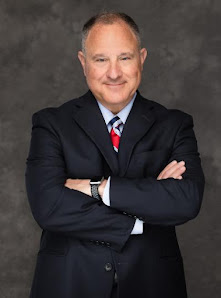
Matthew T.
Mangino is of counsel with Luxenberg, Garbett, Kelly & George P.C. His
book, "The Executioner's Toll," 2010, was released by McFarland
Publishing. You can reach him at www.mattmangino.com and follow him on Twitter
@MatthewTMangino
To visit Creators CLICK HERE




 Posts
Posts


No comments:
Post a Comment