Wednesday, November 15, 2023

Listen to my interview on Crime Stories with Nancy Grace

Join me and Nancy Grace on Crime Stories as we discuss the tragic murder of Jillian Ludwig a student at Belmont University in Nashville, TN. To listen CLICK HERE


Joining Nancy Grace:

Geri Wainwright -  Great Aunt of Jillian Ludwig 

Eileen Bearisto Mahoney- Family Friend of The Ludwigs

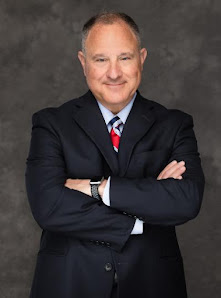
Matthew Mangino – Attorney, Former District Attorney (Lawrence County); Author: “The Executioner’s Toll: The Crimes, Arrests, Trials, Appeals, Last Meals, Final Words and Executions of 46 Persons in the United States;" Twitter: @MatthewTMangino

Dr. Shari Schwartz– Forensic Psychologist (Specializing in Capital Mitigation and Victim Advocacy); Author: “Criminal Behavior” and “Where Law and Psychology Intersect: Issues in Legal Psychology;” Twitter: @TrialDoc

Andy Kahan  - Director of Victim Services and Advocacy at Crime Stoppers of Houston

Marissa Sulek - Reporter for WSMV; Instagram: @marissasulek, X: @marissa_sulek, Facebook: @Marissa Sulek WSMV 


Tuesday, November 14, 2023

SCOTUS waits 234 years to adopt a Code of Conduct

 Adam Liptak writing for The New York Times:

The Supreme Court issued an ethics code after a series of revelations about undisclosed property deals and gifts intensified pressure on the justices to adopt one.

In a statement, the justices said they had established the code of conduct “to set out succinctly and gather in one place the ethics rules and principles that guide the conduct of the members of the court.” Left unclear was how the rules would be enforced, and the court said that it was still studying how any code would be put into effect.

“For the most part these rules and principles are not new,” the court said, adding that “the absence of a code, however, has led in recent years to the misunderstanding that the justices of this court, unlike all other jurists in this country, regard themselves as unrestricted by any ethics rules.”

Revelations of lavish vacations and high-end gifts have cast a light on how few ethics rules bind the justices, but under the new code, it remains unclear which of those activities would violate the rules — and who would decide.

The code, laid out over nine pages, does not place specific restrictions on gifts, travel or real estate deals. But it does caution the justices that they should not take part in outside activities that “detract from the dignity of the justice’s office,” “interfere with the performance of the justice’s official duties,” “reflect adversely on the justice’s impartiality” or “lead to frequent disqualification.”

The rules also prohibit justices from allowing “family, social, political, financial or other relationships to influence official conduct or judgment.” The document cites examples of when justices must recuse themselves from a case, including when they have a “personal bias” or a financial interest.

The Supreme Court announced on that it had issued an ethics code for the justices after a series of revelations about undisclosed property deals and gifts intensified pressure on the court to adopt one. Here are the ethics rules.

Experts in legal ethics gave the document measured approval.

“This is a small but significant step in the right direction,” said Amanda Frost, a law professor at the University of Virginia. But she said she was troubled by the court’s failure to acknowledge past transgressions and the lack of a mechanism to enforce the new restrictions.

Daniel Epps, a law professor at Washington University in St. Louis, said the new code reflected, if nothing else, a recognition that the court had to act. “It’s good that they did this,” he said. “It’s good that they feel some obligation to respond to public criticism and act like they care.”

But, he added, “in terms of the content, it doesn’t seem to move the ball much.”

Although an ethics code binds judges in the lower federal courts, those rules have never governed the Supreme Court because of its special constitutional status. In a letter to lawmakers this spring, Chief Justice John G. Roberts Jr. said the court “takes guidance” from the ethics code for other federal judges and shared a statement signed by all nine justices that insisted that their existing rules were sufficient.

The main difference between the new code and the one that applies to other federal judges is in its treatment of recusal. In commentary the court issued along with the code, the justices said they must be wary of disqualifying themselves from cases because — unlike judges on lower courts — they cannot be replaced when they do.

If you have information to share about the Supreme Court or other federal courts, please send us a secure tip at nytimes.com/tips.

“Because of the broad scope of the cases that come before the Supreme Court and the nationwide impact of its decisions,” the commentary said, the provision on recusal “should be construed narrowly.”

In recent months, a few justices, including Elena KaganBrett M. Kavanaugh and Amy Coney Barrett, publicly voiced support for an ethics policy. In wide-ranging remarks at Notre Dame Law School in September, before the court’s current term began, Justice Kagan said she believed an ethics code “would, I think, go far in persuading other people that we were adhering to the highest standards of conduct.”

In mid-October, Justice Barrett echoed that sentiment during an interview at the University of Minnesota, saying, “It would be a good idea for us to do it, particularly so that we can communicate to the public exactly what it is that we are doing in a clearer way.”

To read more CLICK HERE

Monday, November 13, 2023

GOP legislators in Ohio want to undo abortion referendum

Ohio state Republican lawmakers are once again trying to overturn the will of the people, after a devastating loss on abortion rights, reported The New Republic.

Ohioans overwhelmingly chose to enshrine abortion protections in the state Constitution earlier this week. Republicans had tried multiple times to block the referendum, called Issue 1, but they were handily defeated every time.

So on Friday, the state GOP unveiled a new tactic: stopping the courts from allowing the new amendment to take effect.

“To prevent mischief by pro-abortion courts with Issue 1, Ohio legislators will consider removing jurisdiction from the judiciary over this ambiguous ballot initiative,” Republican state representatives said in a press release. “The Ohio legislature alone will consider what, if any, modifications to make to existing laws based on public hearings and input from legal experts on both sides.”

The new amendment doesn’t take effect until December 7, and even then, it isn’t automatically implemented. Each individual abortion restriction needs to be repealed by a court. And Ohio has a lot of restrictions.

Abortion is legal up to 22 weeks, but certain abortion procedures are banned. Patients must wait 24 hours and undergo anti-abortion biased counseling before they can undergo the procedure. State-based insurance is prohibited from covering abortion services, and minors must have the consent of a parent, guardian, or judge in order to get an abortion.

As abortion reporter Jessica Valenti explained, Ohio Republicans don’t want the courts to repeal all of these restrictions. They want the GOP-controlled state legislature to decide whether to repeal the restrictions.

In the press release, lawmakers also blamed “foreign billionaires” for interfering in the election and tipping it in favor of abortion rights. In reality, right-wing billionaires and organizations donated millions of dollars from out of state (although still domestically) to try to block Issue 1.

This isn’t the first time Ohio Republicans have blatantly ignored—and actively worked against—what the people want. In August, they tried to raise the threshold for constitutional amendments to a 60 percent vote instead of a simple majority.

When that failed, the Ohio Ballot Board voted 3–2, along party lines, to change the text of the amendment on the ballot to a Republican-authored summary littered with inflammatory and fearmongering language.

Republicans have repeatedly refused to accept the results of elections on abortion, in a massive threat to local democracy. In Kansas, despite residents voting overwhelmingly in August 2022 to keep abortion rights in the state Constitution, the state legislature is still trying to pass laws that would restrict abortion access. And in Wisconsin, after voters elected a state Supreme Court judge in large part because of her outspoken support for abortion access, state Republicans tried to impeach her.

To read more CLICK HERE


Saturday, November 11, 2023

Mangino discussed police K-9s in the wake of Ohio marijuana referendum

Watch my interview with Corey McCrae discussing how the new marijuana referendum may impact Ohio police searches.

To watch the interview CLICK HERE

Friday, November 10, 2023

Texas executes man for 1990 robbery and murder

 The 21st Execution of 2023

The state of Texas executed Brent Ray Brewer on November 9, 2023 for the 1990 robbery and murder of Robert Doyle Laminack in Amarillo, reported Texas Public Radio.

As Brewer faced his execution, his final words expressed remorse for the murder: “I hope you find peace."

The U.S. Supreme Court rejected Brewer’s final appeal arguing the death sentence was the product of invalid testimony from a discredited psychiatrist.

“The main reason he was sentenced to death is because the state presented unreliable and false evidence from a guy named Dr. Richard Coons, who they have used in multiple cases in Texas. And Dr. Coons has basically been found by the courts to be an unreliable witness,” Attorney Shawn Nolan told TPR. “His testimony and his science has been found to be junk science.”

Nolan said Coons' testimony should have been ignored because Coons never met with Brewer to give him an examination.

The regulations for doctors to testify about somebody's mental health status require them to examine the person, and that did not happen in this case.

“Coons never met Brent, yet he got up on the stand and said that Brent had no conscience and that he would be a future danger to society, even in prison. That was just outrageous testimony.” Nolan said. “That should never have been presented to a court.”

Nolan also argued the death penalty was not justified because Brewer was not a threat to society. Brewer expressed remorse for his actions prior to his final words at his execution, including in a recent video provided by his attorneys.

“Even though it's 33 years ago, I don't even know where to begin. Now, how do you fix something that can't be fixed? The 53 year old guy you're looking at now is not the 19 year old I was in April of 90. I don't even know that kid. How do you explain stabbing somebody and then running off and you don't know what happened until later on?” Brewer said.

“When you're 19, 20 and you're confused, or you're on drugs, or you're drinking, or you're hanging around the wrong people, you have no real value system. I guess you'd call it a moral compass,” he said. “I sobered up in the county jail and realized that I had done something I can't undo, and I had to live with that every day.”

Brewer was given a second sentencing trial in 2009, where Coons testified for a second time. Randall County District Attorney James Farren sought the death penalty and for the second time, a jury agreed.

On Tuesday, the Texas Board of Pardons and Paroles voted unanimously against commuting Brewer's death sentence to a lesser crime or to grant a six month reprieve.

Brewer was the seventh inmate Texas has executed this year and he was the 21st person to be executed nationwide, according to the Death Penalty Information Center.

To read more CLICK HERE

Thursday, November 9, 2023

Don't ignore the real threat of authoritarianism

The New York Times and the Washington Post each recently published news articles describing how Donald Trump intends in his second term to select political appointees who will unquestioningly follow his orders and turn the prosecutorial power of the Justice Department against his political adversaries, reported Press Watch.

What they were basically describing was a dictatorship, where one person makes all the rules, unchecked, and political opposition is considered a crime.

It is important, terrifying stuff.

But as the Philadelphia Inquirer’s Will Bunch argued in a standout column on Sunday, the tone the reporters and editors chose was understated to the point of cowardice and apathy.

At the Times, he wrote, the editors “made sure to present this major report in the blandest, most inoffensive way possible — staying true to the mantra in the nation’s most influential newsroom that the 2024 election shouldn’t be covered any differently, even when U.S. democracy is on the line.”

(By contrast, Bunch called on journalists to use “the keyboard as a weapon to fight for democracy instead of dispassionately reporting, evenhandedly, on its slow death.” Amen!)

The Post’s word choices were similarly pusillanimous. After describing Trump’s plans to prosecute critics and have the military put down protests, the authors arrived at this whingey conclusion: “Critics have called such ideas dangerous and unconstitutional.”

That’s insufficient. The essential, missing context is: This is how democracies die.

Let me rewrite that for you.

The New York Times

The article by Jonathan Swan, Charlie Savage and Maggie Haberman was eventually headlined: “If Trump Wins, His Allies Want Lawyers Who Will Bless a More Radical Agenda”. (Gift link.)

That’s way better than the original headline: “Trump’s Allies Want a New Style of Lawyer if He Returns to Power.” I guess we should be grateful for that.

But neither comes close to telegraphing the truth. Let me rewrite that headline for you: “If Trump Wins, His Allies Want No Obstacles to Dictatorship”.

The Times subhead was “Politically appointed lawyers sometimes frustrated Donald J. Trump’s ambitions. His allies are planning to install more aggressive legal gatekeepers if he regains the White House.”

Let me rewrite that, too: “Politically appointed lawyers sometimes frustrated Donald J. Trump’s ambitions. His allies are planning to install enablers instead.”

To read more CLICK HERE

Wednesday, November 8, 2023

Gallup: Half of America thinks death penalty applied unfairly

For the first time since Gallup started asking about the fairness of the death penalty's application in the U.S. -- a trend that dates back to 2000 -- more Americans say it is applied unfairly (50%) than fairly (47%). This represents a five-point increase in the percentage who think it is applied unfairly since the prior measurement in 2018.

To read more CLICK HERE