Thursday, September 5, 2013
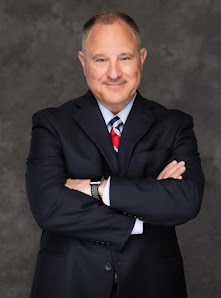
Mangino on WFMJ-TV
Watch my interview on WFMJ-TV concerning the arrest of a Hermitage, Pennsylvania for allegedly practicing in fortune telling. The conduct is illegal in Pennsylvania pursuant to 18 P.S. 7104. Under Pennsylvania law, fortune telling is a third degree misdemeanor.
Click HERE to watch the interview


See Our Ranking in 50 Best Criminal Justice Blogs of 2013
50 Best Criminal Justice Blogs of 2013
September 3, 2013
The following blogs provide solid, thought-provoking content for criminal justice enthusiasts, students conducting research, and citizens keeping tabs on the legal system.
No. 12 Matt Mangino
The opinions of criminal defense attorneys provide important insight into the workings of the criminal justice system, even when their ideas are unlike your own. Matt Mangino is an attorney and a former prosecutor, so the perspective he brings to his blog is unique. The entries deal with current events and legislative policy in editorial presentations that are often reprints of Op-Eds and other Mangino publications. Mr. Mangino was also a member of the parole board, so his criminal justice musings are also colored with his exposure to that side of the legal system. Overall, the articles are thought-provoking and well-constructed.
Visit BACKGROUNDCHECKS.ORG
Bloomberg sues council over 'stop-and-frisk'
New York Mayor Michael Bloomberg has sued the New York City Council in a bid to overturn a law aimed at curbing the police department's use of its controversial stop-and-frisk policy, reported Reuters.
The council passed the measure in the wake a federal court decision banning the city's tactics, along with another bill creating an independent watchdog to monitor the New York Police Department, overriding the mayor's veto despite his warnings that the legislation would threaten public safety.
The council's votes came less than two weeks after a federal judge ruled that the department's stop-and-frisk policy, under which officers stop people in high-crime areas they suspect of engaging in criminal activity, is unconstitutional because it targets minorities disproportionately.
The bill that prompted Bloomberg's lawsuit expanded the definition of racial profiling and gives New Yorkers who believe they were targeted the right to sue police in state court.
The lawsuit, filed in state Supreme Court in Manhattan, asserted that the bill was invalid because it is superseded by the state's criminal procedure law which governs the standards and procedures that police officers must follow.
The city has also appealed the federal ruling on stop-and-frisk from U.S. District Judge Shira Scheindlin, who called the strategy "indirect racial profiling" and appointed a monitor to oversee reforms to the street stops. The monitor, former chief city attorney Peter Zimroth, will work separately from the NYPD inspector general.
To read more Click Here
Wednesday, September 4, 2013
Undocumented immigrants flood federal prisons
Now, just as the federal government has pulled back the throttle on the drug war, it is embarking on an unprecedented campaign to criminally prosecute undocumented immigrants crossing the border. The result: A new wave of non-violent offenders are flooding the nation's prisons.
"This is the crime du jour," Judith Greene, director of the nonprofit Justice Strategies, which has focused on the private prison industry's growing reliance on incarcerating undocumented immigrants told the Huffington Post. "It's the drug war all over again. It's what's driving the market in federal prisons."
Immigration offenders represent one of the fastest-growing segments of the federal prison population, providing a lucrative market for private prison corporations that largely control these inmates in the system. Over the last decade, revenue from the federal prison system has more than tripled for the GEO Group and nearly doubled for Corrections Corp. of America -- the two companies that dominate the private prison industry.
To read more Click Here
Missouri may opt out of federal sex offender registry
Changes to Missouri's sex offender registry law could cost the state hundreds of thousands of dollars in federal funding, reported the Columbia Missourian.
According to the Department of Justice, Missouri could lose 10 percent of its federal funding under the Justice Department Adam Walsh Act if the General Assembly passes House Bill 301.
The bill, which was sponsored by Rep. Kevin Engler, R.-Ste. Genevieve, would remove the names of juvenile sex offenders from the public website and allow qualifying offenders to have their names deleted from the registry. Gov. Jay Nixon has vetoed the bill, saying that it poses a public safety risk because it doesn't differentiate between violent and nonviolent offenders.
House Speaker Tim Jones, R-Eureka, has said that he and his colleagues will attempt to override the governor's veto when legislators reconvene in September.
Rep. Dave Hinson, R.-St. Clair, who voted for the bill in May, said he was not going to let the loss of federal funds sway his vote and that any loss in federal funding would be made up by the state.
"I think this is good policy over what the federal policy does," he said. "That is why only 16 states are compliant with the law."
To read more Click Here
Tuesday, September 3, 2013
Collateral consequences of the war on drugs
During debates over welfare reform in 1996, a food stamp ban was written into federal law, but providing states with the option to waive or modify the requirement, reported Sheila Bapat on AlterNet.com.
As a Congressional Research Service report published in July explained, “Both TANF and SNAP are subject to the statutory 'drug felon ban,' which bars states from providing assistance to persons convicted of a drug-related felony, but also gives states the ability to opt-out of or modify the ban, which most states have done.”
Twenty one states have completely done away with the lifetime ban and an additional 30 have modified it. In California for example, the food stamp ban has been modified only to include people convicted of selling drugs, not those convicted of use or possession.
But the original food stamp ban is still in effect in 12 states, making life that much harder for poor people well after they’ve completed drug-related sentencing. According to the ACLU there are an estimated 575,000 people behind bars in the United States for drug-related offenses. The food stamp ban is even more problematic given how tough Drug sentences tend to be.
The socioeconomic and racial disparities of drug sentencing are clear as well: the ACLU also tells us that African Americans are incarcerated on drug charges at a rate that is 10 times greater than that of whites.
To read more Click Here
Monday, September 2, 2013
White House convenes big city anti-crime meeting
Philadelphia Mayor Michael Nutter joined 15 other big-city mayors at the White House last week for meetings with President Obama and Attorney General Eric Holder over strategies to stem youth violence, reported the Philadelphia Inquirer.
The president wanted to hear ideas on how to create better partnerships between federal agencies and local government to improve crime-fighting efforts, Nutter said after the meetings.
"The president acknowledged there may be no significant federal funding or new programs to roll out," Nutter said. "But several agencies have a variety of resources they already provide. The president focused on what we're doing that works . . . and what other ideas we may utilize to drive down crime in different parts of the country."
Nutter said he was one of four mayors asked to speak and described anti-crime partnerships with federal agencies in Philadelphia, which he credited with helping the city to reduce homicides this year.
He said he suggested that the corporate and philanthropic communities might provide money for new anti-crime initiatives in public-private partnerships if they knew more about Obama's efforts.
A follow-up meeting with Holder got into more detail on the potential use of federal equipment and technology to help local law enforcement, Nutter said. He was joined at the second meeting by Everett Gillison, his chief of staff and deputy mayor for public safety.
Nutter mentioned a program in Memphis, where residents of public housing register their automobiles with police, who then use video surveillance equipment to track vehicles coming into the neighborhoods from outside.
Nutter called the meetings "very productive" and said Obama had assigned Holder and Vice President Biden to continue follow-up work.
To read more Click Here
Subscribe to:
Posts (Atom)


 Posts


