Saturday, October 5, 2013

GateHouse: Confusion reigns for juvenile life without parole

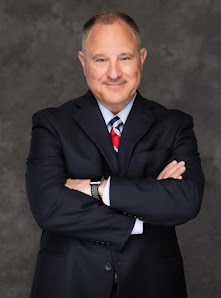
Matthew T. Mangino
GateHouse News Service
October 4, 2013

The U.S. Supreme Court is recognized as the ultimate court of last resort. That means the final word rests with the nine justices sitting in Washington’s “marble palace.” Yet the court often leaves us scratching our heads after seemingly straightforward decisions.

In the last 10 years, the Supreme Court has made some monumental decisions about the punishment of young offenders. In Roper v. Simmons, decided in 2005, the court held that it was cruel and unusual punishment to impose the death penalty for killings committed by juveniles. Graham v. Florida, a 2010 decision, ruled that it was cruel and unusual punishment to impose a life sentence without the possibility of parole for non-homicide crimes committed by juveniles.

Most recently, in Miller v. Alabama, the court ruled that a “mandatory” sentence of life in prison without parole for a juvenile was unconstitutional.

Following the Roper decision, all the offenders who committed their crimes as juveniles were released from death row. After Graham, all the offenders serving life for non-homicide offenses committed as juveniles were released or scheduled for parole consideration.

However, in the wake of Miller, most of the roughly 2,000 inmates serving mandatory life without parole for killings committed as juveniles have not had their sentences vacated. Why? The court didn’t provide any rules or guidelines for carrying out the decision.

The earlier decisions prohibited the government from ever imposing certain punishments — the death penalty or life without parole for non-homicide crimes. Those were considered substantive changes to the law. Miller does not make it unconstitutional in all circumstances for a state to impose a sentence of life without parole. Rather, Miller only holds that a life sentence for a juvenile cannot be mandatory. Some suggest this was a procedural change in the law and therefore not retroactive.

Individual states have been left to decide whether Miller applies to all juvenile life sentences, whenever imposed. In Pennsylvania, which has the largest number of inmates whose sentences are covered by Miller, the state supreme court has been considering the retroactivity question for over a year. The matter was argued on Sept. 12, 2012, and there has not been a decision. In fact, because the law is evolving so rapidly around the country, lawyers have asked to reargue the matter before the court.

In Michigan, Iowa, Illinois, Louisiana and Mississippi, judges have ruled that the Supreme Court decision applies retroactively to all prisoners serving mandatory life sentences regardless of when they were sentenced, reported Stateline, the news service of The Pew Charitable Trusts. In Minnesota and Florida, judges have ruled that the Supreme Court decision only applies to future cases.

The Minnesota Supreme Court decided that "the rule announced in Miller is a new rule of criminal constitutional procedure that is neither substantive nor a watershed rule implicating the fundamental fairness and accuracy of the criminal proceeding."

A federal judge ruled that Michigan must grant parole consideration to anyone convicted of murder as a juvenile, rejecting the state attorney general’s request that Miller only applies to offenders who challenged the state’s law.

An Iowa court recently ruled that Gov. Terry Branstad overreached last year when he commuted the life sentences of offenders convicted as juveniles and imposed an opportunity for parole after 60 years in prison. The court said the governor's commutation still amounted to a life sentence without parole.

The issues of procedure and substance mean little to a prisoner facing a lifetime behind bars. This issue turns on fairness. Why would a juvenile who was convicted of a murder in 1983 be any more culpable than a juvenile who committed a murder in 2013? Granted, the court did not abolish life without parole, but a juvenile offender who is entitled to a reasonable opportunity for parole for a crime committed today, is no more entitled to that relief than an offender who committed her crime 10, 20 or 50 years ago.

Matthew T. Mangino is of counsel with Luxenberg, Garbett, Kelly and George and the former district attorney for Lawrence County, Pa. You can read his blog at www.mattmangino.com and follow him on Twitter at @MatthewTMangino.

To read more Click Here

Friday, October 4, 2013

The Cautionary Instruction: Justice Reinvestment may not deliver on promises

Matthew T. Mangino
The Pittsburgh Post-Gazette/Ipso Facto
October 4, 2013

Justice Reinvestment is sputtering in Ohio. The two-year-old plan to reduce Ohio’s prison inmate population is not having the hoped-for impact. The number of prisoners behind bars is expected to spike.

Gary Mohr, director of the Ohio Department of Rehabilitation and Correction, said the state prisons’ already high population of 50,000 could soar to 52,000 in two years and top 53,000 in six years. The population numbers are in contrast to rosy projections from 2011 when lawmakers passed the Justice Reinvestment Initiative (JRI).

Under the law, the number of inmates was supposed to drop to around 47,000 by 2015 and dip below 47,000 two years after that.

JRI is a data-driven approach to improve public safety, reduce corrections and related criminal justice spending, and reinvest savings in strategies that can decrease crime and strengthen neighborhoods. Seventeen states are involved in implementing some form of justice reinvestment including Pennsylvania.

As a result of JRI, the Pennsylvania Department of Corrections touted a decline in the inmate population of 573 inmates during the period ending December 31, 2012-- the largest decrease and only the third yearly population decline in the past 40 years.

Secretary of Corrections John Wetzel said in May, “We are closing two facilities -- SCI Greensburg and SCI Cresson -- older, more costly and less efficient facilities which will result in $22-$23 million in savings in the 2013-14 budget.”

However, as in Ohio, the news in 2013 is not so cheery. For the first eight months of the year, Pennsylvania’s prison population is on the rise. This year, there are 254 more inmates in Pennsylvania’s prisons bringing the total as of August 31 to 51,438.

Ohio is currently at 131 percent of inmate capacity and could hit 139 percent by 2019. California’s prison system was declared unconstitutional at 140 percent. Pennsylvania is at a “modest” 110 percent of capacity.

To fix the problem, Mohr proposes working with judges to find ways to reduce prison commitments and with lawmakers to re-examine penalties for less serious crimes.

Ohio Supreme Court Chief Justice Maureen O’Connor admitted in her recent State of the Judiciary speech that some of the overcrowding initiatives included in JRI have “not been as successful as hoped.”

Justice O’Connor acknowledged that, “We as judges must be part of the solution because we are certainly part of the problem. We cannot take an attitude of out of sight, out of mind once offenders leave the courtroom.”

I recently wrote for GateHouse News Service, “The criminal justice system can benefit from meaningful reform. Let’s not nibble around the edges.” JRI is, unfortunately, part of the nibbled edge.

Real criminal justice reform would open the door to alleviating prison overcrowding, provide a fairer sentencing scheme and reduce the collateral consequences of conviction.

Visit Ipso Facto

Thursday, October 3, 2013

Mangino on WKBN-TV

Watch my October 3, 2013 interview on WKBN-TV about an on going sexual harassment investigation in the City of Youngstown.

Click Here for the full interview.

Two percent of counties responsible for majority of executions

Only two percent of the counties in the United States have been responsible for the majority of cases leading to executions since 1976, according to a report by the Death Penalty Information Center(DPIC). Likewise, only two percent of the counties are responsible for the majority of today’s death row population and recent death sentences.

To put it another way, all of the state executions since the death penalty was reinstated stem from cases in just 15 percent of the counties in the United States. All of the 3,125 inmates on death row as of January 1, 2013 came from just 20 percent of the counties.

The word county is used in 48 of the 50 states. Louisiana uses the term parish and Alaska uses borough. Including those, there are 3,077 counties in the United States. However, only 32 of the 50 states have the death penalty.  There are 2,444 counties in death penalty states.

Bases on the DPIC report only 49 counties account for a majority, more than half, of all executions.  The report also suggests that all 1,348 executions in the modern era of the death penalty have come from 15 percent of counties nationwide which would be 461 counties.

To read the full report How a Minority of Counties Produce Most Death Cases at Enormous Costs to All Click Here

Wednesday, October 2, 2013

GateHouse: The public safety double whammy

Matthew T. Mangino
GateHouse News Service
October 2, 2013
 
The dreaded government shutdown is here. The sun rose, your lights are still on, and for most Americans—unless you work for the federal government — you still have a job. There is no question that a shutdown can be inconvenient and a hardship, but can it be dangerous?
 
The double whammy — sequestration and a government shutdown — will have an impact on public safety.
 
Chief Judge Solomon Oliver Jr. of the U.S. District Court for the Northern District of Ohio said the federal court system could function for about two weeks, using court imposed fees collected over time. “Beyond two weeks, those funds probably would be exhausted,” Oliver told the Akron Beacon Journal. “So if there’s any shutdown for a substantial period of time, it’s going to be devastating to the courts and, I’m sure, all of the governmental agencies.”
 
After those two weeks, if there is still no appropriation, the Judiciary will operate under terms of the Antideficiency Act, which allows "essential work" to continue during a lapse in appropriations. Agencies with essential employees include federal prisons, law enforcement and criminal courts.
Even before the shutdown, federal courts were feeling the crunch. Sequestration, the across-the-board government spending reductions, have cost the courts nearly $350 million this year.  The cuts have been called “devastating” and “painful.”
 
Clerks, probation and pretrial offices have lost as many as 1,000 staff. The staff that has been maintained have surrendered about 8,600 furlough days during 2013.
 
Initially, the government shut down will not result in cuts for any government employee whose work is essential to “protect life and property." For example: all emergency medical care, food-safety inspections, border patrol, emergency and disaster assistance, overseeing the banking system, operating the power grid, guarding federal property, investigating crime and resolving cases.
 
However, Atlanta's U.S Attorney and the special agent in charge of the FBI said that deep budget cuts are already diverting funds from investigating crime, and it's putting public safety at risk.
 
"When you have fewer people, when you have less money, when you don't have the resources to do the cases you used to do, there's going to be a public safety impact on the district," U.S. Attorney Sally Yates told Mark Winne of WSB-TV in Atlanta.
 
"A furlough is just a nice way of saying 'pay cut.'" Yates said. "We're doing everything we can to try to prioritize our cases and to do the most significant cases."
 
The FBI is the federal government’s investigative arm, responsible for everything from counter-terrorism to domestic crime.  The agency already has a hiring freeze, so agents who retire or otherwise leave the agency are not being replaced. As the prospect of furloughs loom over the agency Mark Giuliano, FBI agent-in-charge told Winne, "We’re talking about as many as 16 (furlough) days for every employee of the FBI nationwide."
 
Those who defend people in federal court are also feeling the pain. Federal public defenders will be forced to terminate up to half their employees and close branch offices if funding stays at the same level in the upcoming federal budget, not to mention a government shutdown. Michael Nachmanoff, a federal public defender from Virginia predicted, “The federal defender system will be devastated.”
 
Local law enforcement has also taken a pounding in the last two years. According to the International Association of Chiefs of Police, federal funding for criminal justice assistance through the U.S. Department of Justice has dropped by an enormous 43 percent.
 
Forty-four percent of local law enforcement agencies reported a funding drop of at least one-third while 14 percent reported a cut of more than one-half.
 
When you have fewer people and less resources logic dictates that public safety will be impacted.
 
Matthew T. Mangino is of counsel with Luxenberg, Garbett, Kelly and George and the former district attorney for Lawrence County, Pa. You can read his blog at www.mattmangino.com and follow him on Twitter at @MatthewTMangino.
 
To read more Click Here


Lawsuit: Arizona governor pressures clemency board in high-profile cases

Five former members of the Arizona Board of Executive Clemency say they were pressured by a top aide to Governor Jan Brewer to deny requests for relief in high-profile cases, according to The Arizona Daily Star.

In a signed affidavit, former Chairman Jesse Hernandez said he was called into several “come to Jesus” meetings by Scott Smith, Brewer’s chief of staff. Hernandez said Smith told him the governor does not want a repeat of two situations when the board had recommended clemency, putting her in the position of having to reject the pleas.

“I immediately understood this to mean that Governor Brewer was directing me not to recommend clemency in high-profile cases,” Hernandez wrote.

Four other former board members — three who were replaced and a fourth who, like Hernandez, later quit — made similar complaints. Some contended Brewer refused to reappoint them because they had supported earlier clemency efforts.

The filings came in a federal court lawsuit filed Thursday in a bid to stop the Oct. 9 execution of Edward Schad, convicted in the 1978 murder of Lorimer Grove of Bisbee.

Schad has exhausted all of his legal appeals. But he is scheduled to go before the five-member clemency board next week — a board his lawyers contend now has members under pressure to reject his plea.

The board’s vote is significant because Brewer can grant a reprieve only if the board recommends one.

Schad’s attorneys contend Brewer is embarrassed by rejecting some high-profile requests and has made it clear to board members, through her staff, they should not put her in that position.
by Capitol Media Services show Brewer got 22 recommendations last year, granting seven.

To read more Click Here

Tuesday, October 1, 2013

The shutdown begins, Antideficiency Act kicks in

Could be very expensive to restart the government

The government shutdown will be governed by a 19th century law that is, thankfully, little known and little used.

The Antideficiency Act is a collection of statutory and administrative provisions that forbid federal officials from entering into financial obligations for which they do not have funding, like paying the salaries of their employees or buying the things they need to run the government, according to The Atlantic.

It's also the law that wisely permits certain "essential" government functions -- like the military and the courts, for example -- to keep operating even in the absence of authorized legislative funding. The courts have about 10 days of available funding before devastating cuts are imposed.

The Act prohibits federal employees from
    • making or authorizing an expenditure from, or creating or authorizing an obligation under, any appropriation or fund in excess of the amount available in the appropriation or fund unless authorized by law. 31 U.S.C. § 1341(a)(1)(A).
    • involving the government in any obligation to pay money before funds have been appropriated for that purpose, unless otherwise allowed by law. 31 U.S.C. § 1341(a)(1)(B).
    • accepting voluntary services for the United States, or employing personal services not authorized by law, except in cases of emergency involving the safety of human life or the protection of property. 31 U.S.C. § 1342.
    • making obligations or expenditures in excess of an apportionment or reapportionment, or in excess of the amount permitted by agency regulations. 31 U.S.C. § 1517(a).
Federal employees who violate the Antideficiency Act are subject to two types of sanctions: administrative and penal. Employees may be subject to appropriate administrative discipline including, when circumstances warrant, suspension from duty without pay or removal from office. In addition, employees may also be subject to fines, imprisonment, or both.

"The irony is that it always costs money to restart them and they typically get their back pay for the days they don't work, the government employees, and they have to catch up on the work that's not done while they are on these involuntary furloughs," Harvard Law Professor Howell E. Jackson, a budget and regulatory expert told The Atlantic. "So it's a very expensive way to play politics over the fiscal crisis."

To read more Click Here