Friday, August 7, 2020

DHS Secretary's former clients earn $160 million in government contracts

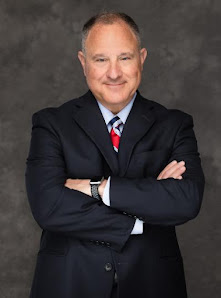
Several former lobbying clients of Chad Wolf, now the acting secretary of Homeland Security, have received millions of dollars’ worth of government contracts while he has held senior positions within the department, reported CNBC. 

Wolf, who became the acting chief of the department late last year, was a lobbyist for over a decade at Wexler & Walker before he took leadership roles with DHS under President Donald Trump. Wolf served as the acting chief of staff at the Transportation Security Administration in 2017 and later became the chief of staff for former Homeland Security Secretary Kirstjen Nielsen.  

Since then, several of Wolf’s former clients reaped a total of at least $160 million in contracts from DHS, according to a CNBC analysis of the public filings. 

A DHS spokesman told CNBC that Wolf has no involvement with any government contracts. 

“Acting Secretary Wolf has had zero involvement in DHS contract awards, including contracts won by his former clients. He leaves those matters to the career professionals in the DHS Chief Procurement Office,” the agency spokesman said. 

After joining TSA, Wolf recused himself from DHS matters that involved his former clients. He has maintained that recusal throughout his tenure at the department. 

Still, Democrats pounced on the revelation, arguing that it marks the latest example of how the Trump administration acts against the president’s own promise of “draining the swamp.” 

“Donald Trump and Chad Wolf’s flagrant conflicts of interest screw taxpayers over while rewarding their crony friends and special interests. When voters sent Trump to Washington, they thought he would ‘drain the swamp,’” Kyle Morse, a spokesman at Democratic super PAC American Bridge, told CNBC.

Trump signed an executive order in 2017 that banned former lobbyists and lawyers from taking part in government matters linked to their previous clients for the first two years of their tenure in the administration. Some Trump officials, however, have been given waivers to that rule. Wolf’s name is not on the public waiver list that was issued in April of this year.  A list created by ProPublica showing Trump aides who signed the ethics waiver also does not include Wolf. 

The executive order also called on former Trump officials not to take part in lobbying for the five years following their appointments. The nonpartisan Center for Responsive Politics shows that even after being a member of the Trump White House, many do go on to work for lobbying firms. 

The developments also come as Wolf and the department are under scrutiny by Democrats for how they treated protesters in Portland, Oregon. The protests stemmed from the unrest following the Minneapolis police killing of George Floyd, an unarmed Black man, on Memorial Day. 

Among the former Wolf clients to receive multimillion-dollar contracts are American Science and Engineering, an X-ray equipment manufacturer; ABB, an automation company based in Switzerland, and Analogic Corporation, a technology business owned by private equity firm Altaris. These companies did have other contracts with DHS before Wolf arrived there. 

One American Science and Engineering contract, which took effect on July 1, 2018, is worth just over $80 million, a filing says. The company, in this case, is dedicated to supplying U.S. Customs and Border Protection, which is under DHS, with maintenance and support services. AS&E, which, according to its website, is now owned by Rapiscan Systems, saw at least $93 million in DHS contract obligations in 2018.

Analogic received over $9 million in DHS contracts between 2017 and 2018. In 2017, Analogic announced a $4 million base contract with TSA, another agency under Homeland Security.  

The contract allowed Analogic “a 12-month development phase and 24 months of prototype warranty, with options for additional ConneCT prototypes and warranty for a period of 24 months at the TSA’s discretion,” the release, dated Nov. 2, 2017, says. 

From 2008 until 2010, Wolf lobbied TSA for Analogic on issues related to security equipment, lobbying disclosure reports say. The New York Times reported that Wolf tried to help Analogic sell its carry-on baggage equipment to TSA when he was still working at Wexler & Walker. Wolf, who also worked at TSA during the Bush administration, later became the agency’s acting chief of staff under the Trump presidency. 

ABB, which had tapped Wolf to lobby Congress on its behalf, also saw a major contract go its way while Wolf held top positions at DHS. ABB received a DHS government contract worth $5.6 million for services dedicated to the U.S. Coast Guard. 

Wolf lobbied for ABB until 2016. Filings show that during his last year of work for the company, he focused, in part, on issues related to the “United States Coast Guard Icebreaker,” a fleet of ships that have the ability to go through thick sheets of ice in places such as the Arctic.  

An ABB spokesman gave details about the focus of the contract and noted that the company has had no contact with Wolf since he finished his tenure as a lobbyist. 

“The contract referenced in your email is a service and maintenance contract for a vessel commissioned with an ABB Azipod propulsion system back in 2006,” the spokesman, Chris Shigas, explained. “To our knowledge, ABB representatives did not meet or discuss any agreements with Mr. Wolf since he left Wexler Walker.”  

Representatives for Analogic and AS&E did not respond to requests for comment. 

To read more CLICK HERE


Thursday, August 6, 2020

Manhattan DA expands investigation into Trump's defunct charity

In a recently released court filing, the office of Manhattan District Attorney Cyrus Vance Jr. said that the prosecutor has expanded the inquiry into President Trump’s now defunct charity beyond the original claims of illegal hush money payments and is investigating other potential criminal actions.

The Manhattan District Attorney’s office has been investigating claims since 2018 that Trump used funds from his private charity, the Trump Organization, to pay women with whom the President had extramarital affairs in exchange for their agreement not to publicly speak of the affairs. The President argued that the subpoenas issued by the office for his personal tax returns and those of his charity were illegal, an argument which the Supreme Court rejected in July. 

Following the Supreme Court decision, Trump’s attorneys amended their complaint at the District Court, arguing instead that the subpoenas sought by Vance were improper because of “overbreadth” and “in bad faith” because the records sought date from before the alleged hush money payments were made.

In the response to the amended complaint, Vance stated that allegations of further wrongdoing at the Trump Organization have been “public knowledge” and widely reported by media and therefore the subpoenas are not overbroad. In particular, the response cited numerous articles in the Washington Post and Wall Street Journal to illustrate that potential illegal activity at the charity was not limited to the hush money payments.

To read more CLICK HERE 

Wednesday, August 5, 2020

Gun violence on the rise in some big cities

Gun violence has been rising lately in some of the biggest American cities. It’s happened in New York, Chicago, Philadelphia and, perhaps most notably, Minneapolis, the scene of the brutal killing of George Floyd and the intense protests that followed, reported the New York Times.

The trend raises a question: Is it possible to change the nature of policing in the United States — and to make it less violent, as protesters are demanding — without unleashing other kinds of violence?

First, the crime increase is not just statistical noise. It’s real, even if there are sometimes multiple causes, depending on the city. “It is a pattern,” Sharkey said. “When there have been large-scale protests against police, it is pretty clear that some police have stopped doing their jobs, and that’s destabilizing.”
Before this year, the biggest examples were in 2015, in Baltimore and in Ferguson, Mo., where crime also rose after protests. “I worry this is going to be a violent summer in a lot of cities,” Sharkey added.

But a second point is also vital: The rise in violence is not inevitable.

It happens because some police officers respond to criticism by staging a work slowdown — and because the U.S. relies on the police to fulfill so many roles that other civic organizations could accomplish. That reliance also has huge downsides.

“Police are effective at controlling violence, but there are all these costs,” Sharkey said. They include mass incarceration and widespread violence committed by the police, often against Black men.

“But there are alternatives that maintain safe streets without the costs,” says Sharkey, who was previously the scientific director of Crime Lab New York and is now a Princeton professor. “There is now a body of evidence showing these are not just feel-good stories. The effects are very real.”

The alternatives include conflict-resolution counselors, addiction and mental-health programs, summer-jobs and after-school programs and more. The Cure Violence program, in Chicago, New York and elsewhere, is an example. (For more detail, read this 2017 Times article.)

“We’ve asked police departments to be the primary force that responds to many situations,” Sharkey said. That’s not the only option, of course. But when it’s the approach that cities take — and when police then respond to protests by pulling back — violence often does increase.


Tuesday, August 4, 2020

PA Gov. Wolf signs two police reform bills into law

Gov. Wolf signed two police reform bills, one requiring police officers to disclose their employment history and the other requiring officers to undergo regular mental health evaluations and training.
The passage of these bills marked the first legislative action taken after the George Floyd protests at the capital, reported the Harrisburg Patriot.
“We have made progress in six weeks, but we are far, far from the finish line,” Wolf said. “My executive order and the bills I’m going to sign in the next few minutes are still not enough to halt the systemic racism and oppression that exists throughout our commonwealth.”
Attorney General Josh Shapiro, State Police Lt. Col. Christopher Harris, and state Reps. Dan Williams and Christopher Rabb also spoke at the signing.
“Today, Pennsylvania becomes one of the only states in our country to change our laws in the wake of George Floyd’s murder,” Shapiro said. “When the governor signs his name, that will be a downpayment on the types of reforms we need to deliver on here in Pennsylvania.”
Here’s what we know about each of the bills that passed:
House Bill 1841 will require police agencies to do thorough background checks of any new hires through a statewide database that holds information on disciplinary actions and separation records of all police officers in the state.
Before the passing of this bill, there was no standardized way for police departments to share misconduct records or disciplinary actions with other law enforcement agencies. That meant a police department hiring an officer had no way of knowing if that officer had a history of, for example, of being disciplined for excessive use-of-force.
House Bill 1910 will require enhanced training for police officers on how to treat people of diverse racial, ethnic and economic backgrounds. It also requires officers to take a Post Traumatic Stress Disorder test every two years, or within 30 days of a lethal use-of-force.
The bill also requires implicit bias training and annual training on appropriate use-of-force.
Police organizations across the state have voiced their support for these reforms, including the Pennsylvania State Troopers Association.
“Systemic racism is a complex issue, and it has existed for centuries, and in so many ways, it’s ingrained in our society,” Wolf said.
Two other police reform bills are headed to the state House for action. Senate Bill 459 would require all police departments to report any use-of-force incidents to the state police. The state police would then be required to present annual use-of-force reports to the attorney general. It’s uncertain if these reports will be made public.
Senate Bill 1205 would require police departments to publish their use of force policies and limits the use of chokeholds to instances where deadly force is needed.
To read more CLICK HERE

Monday, August 3, 2020

SCOTUS to decide if suspect who escapes after shot by police can sue

Last month, the Supreme Court refused to hear eight cases on qualified immunity, a doctrine that makes it hard to sue police officers and other officials for misconduct and, as a result, has become a flash point in the nationwide uproar over police brutality, wrote Adam Liptak of the New York Times. That move disappointed critics across the political spectrum who had hoped the court would play a role in helping resolve the broader debate.
But Ms. Torres’s case, which presents an even more fundamental issue, was already on the Supreme Court’s docket. It had been scheduled to be argued in March, but the court postponed it in light of the coronavirus pandemic. It will now be heard in October.
The justices may have wanted to duck the question of police violence. The case from Albuquerque, Torres v. Madrid, No. 19-292, will force them to confront it.Early on a summer morning in Albuquerque in 2014, two state police officers in dark tactical gear arrived at a housing complex to serve an arrest warrant. In the parking lot, they came upon Roxanne Torres, sitting in her car with the engine running.
Ms. Torres was not the woman they were looking for. But the officers, who did not identify themselves, approached her car. Taking them for carjackers, Ms. Torres started to drive away. The officers shot at her 13 times, hitting her twice, but she managed to flee. 
Ms. Torres sued the officers who shot her, Richard Williamson and Janice Madrid, saying they had used excessive force in violation of her Fourth Amendment rights. The amendment bars unreasonable searches and seizures, and the courts have long treated the use of excessive force by the police as a seizure.
Had the officers managed to stop Ms. Torres, there would be no question that she could sue. She might not win, as courts would then consider whether the seizure was reasonable and whether the suit was blocked by qualified immunity. But her suit would not have been shut down from the start.
The question for the justices is whether it should matter that Ms. Torres managed to escape. The United States Court of Appeals for the 10th Circuit, in Denver, ruled that it did. “A suspect’s continued flight after being shot by police,” the court said, “negates a Fourth Amendment excessive-force claim.”
That is hard to square with a statement in a 1991 Supreme Court decision, which said that “the word ‘seizure’ readily bears the meaning of a laying on of hands or application of physical force to restrain movement, even when it is ultimately unsuccessful.”
Precisely what happened on the morning of July 15, 2014, is contested, but there is no dispute that the officers shot an unarmed woman as she tried to drive away. The officers say they feared that Ms. Torres would run them over.
Ms. Torres soon lost control of her car, stopped in a parking lot and asked a bystander to call the police. Receiving no response, she stole a car that had been left running and drove 75 miles to a hospital in Grants, N.M.
She was airlifted to a hospital in Albuquerque, where she was arrested. She pleaded no contest to charges of fleeing from a police officer, assaulting a police officer and stealing a car.
Even the Trump administration says Ms. Torres was entitled to sue. “A subject’s escape will render the seizure fleeting,” Solicitor General Noel J. Francisco wrote in a friend-of-the-court brief, “but will not negate the seizure entirely.” The brief went on to say that Ms. Torres may well lose her case, but on other grounds.
The NAACP Legal Defense and Educational Fund, in a brief supporting Ms. Torres, urged the justices to take account of the history of police violence.
“From the very inception of modern American law enforcement, weapons — and firearms specifically — have been deployed as a means of policing and oppressing African-American communities,” the brief said. “Today, far too many police officers continue to draw and use guns as a means of unjustified control of African-Americans, rather than for valid law enforcement reasons. The 10th Circuit’s decision leaves these countless people without recourse.”
Even if Ms. Torres wins at the Supreme Court, she will have to overcome the doctrine of qualified immunity to prevail in the lower courts. Under that doctrine, officials may be sued for violations of constitutional rights only if the right at issue was clearly established at the time of the conduct in question.
The Supreme Court has used an exquisitely narrow definition of what counts as “clearly established.” Instead of looking to general principles, it requires the plaintiff to do something very difficult in most cases: to identify a decision that concerned nearly identical factual circumstances.
It will not be easy for Ms. Torres to find, for instance, an earlier decision based on circumstances very like her own.
Both Justices Clarence Thomas and Sonia Sotomayor, probably the court’s most conservative and liberal members, have criticized qualified immunity. Justice Thomas wrote that it was created out of thin air. Justice Sotomayor wrote that it had created an impenetrable legal barrier protecting police officers.
The court’s approach, Justice Sotomayor wrote in a 2018 dissent, “sends an alarming signal to law enforcement officers and the public.”
“It tells officers that they can shoot first and think later,” she wrote, “and it tells the public that palpably unreasonable conduct will go unpunished.”
To read more CLICK HERE

Sunday, August 2, 2020

Commission to study the impact of COVID-19 on criminal justice system

The Council on Criminal Justice (CCJ) has launched a national commission to assess the impacts of COVID-19 on the criminal justice system, develop strategies to limit outbreaks, and produce a priority agenda of systemic policy changes to better balance public health and public safety.
Led by former U.S. Attorneys General Alberto Gonzales and Loretta Lynch, the National Commission on COVID-19 and Criminal Justice will:
Evaluate the pandemic’s impact on the four major sectors of the justice system (law enforcement, courts, corrections, and community programs);
Identify the most effective ways to minimize the spread of COVID-19 and the impact of future pandemics on the proper functioning of the justice system, and on the people who work in and are served by it; and
·         Establish a priority agenda of policies and practices that should change, or remain changed, based on what the pandemic and response have revealed about the system’s fairness and effectiveness, particularly for communities of color.
·         At its opening meeting, the Commission was presented with the first in a series of reports presenting new research on COVID-19 and criminal justice. The study, by Richard Rosenfeld and Ernesto Lopez of the University of Missouri-St. Louis, examined crime trends from 27 cities leading up to the pandemic and through June. It found that:
·         Property and drug crime rates fell significantly, coinciding with stay-at-home mandates and business closings. Residential burglary dropped by 20% between February and June 2020. Larceny and drug offenses decreased by 17% and 57%, respectively, between March and June 2020. These declines reflect quarantines (residential burglary), business closings (larceny), and reduced police and street activity (drug offenses).
·         One exception to the drop in property crime was commercial burglary, which spiked by 200% for a single week beginning in late May. The spike is likely associated with the property damage and looting at the start of nationwide protests following the killing of George Floyd.
·         Rates of violent crime showed little change early in the pandemic but began to increase significantly in late May. Homicides (37%) and aggravated assaults (35%) rose significantly in late May and June. The increases could be tied to diminished police legitimacy in the wake of protests after Floyd’s killing.
·         Robbery rose significantly – by 27% — between March and June 2020.
·         Domestic violence also rose, but the increase was not significantly greater than in previous years. In addition, the finding was based on data from only 13 of the cities studied, and thus requires further examination.
To learn more CLICK HERE

Saturday, August 1, 2020

GateHouse: The Confrontation Clause and the return of jury trials

Matthew T. Mangino
GateHouse Media
July 31, 2020
A murder trial resumed this week in New York after the COVID-19 pandemic shut the proceeding down in March. When the trial restarted, after nearly a four-month break, the courtroom was a different place.
The recently resumed trial featured court personnel, jurors, attorneys, witnesses and spectators donning all sorts of personal protective equipment. According to Frank Runyeon of Law360.com, the judge “was decked out in white latex gloves, a blue face mask, spectacles and a plastic face shield as he sat behind plexiglass dividers mounted to the bench.”
The judge’s speech was muffled to the point that attorneys, sitting behind their own fortress of plexiglass walls, masks and face shields, often asked him to repeat himself. The return of jury trials in the midst of a pandemic is crucial - men and women accused of crimes have been sitting in jail awaiting their day in court. Those men and women are guaranteed a speedy trial.
However, bringing those accused of a crime to trial brings with it a host of problems - some of which may be around long after the pandemic is gone. At this point, the primary concern is the health and well-being of everyone involved in the process. That is being addressed in a manner that may contravene the U.S. Constitution.
The Sixth Amendment to the U.S Constitution provides various rights to criminal defendants, one of which is the right to be confronted with the witnesses against them. This right is derived from what is known as the Confrontation Clause.
Since the onset of the pandemic, many courts have conducted hearings via video or telephone. I have participated in virtual hearings. While they help move things along, witnesses and attorneys participating over Skype, Zoom or some other platform are often subject to delay or the freezing of the video and/or audio. The record, the transcription of the proceeding, is often a mess with lawyers talking over witnesses or witnesses talking over judges or a mix of both.
However, a criminal trial is different. In a criminal trial, a person’s liberty is at stake. Remote testimony is inadequate. In 1988, the U.S. Supreme Court said that the Confrontation Clause guarantees “a right to meet face to face all those who appear and give evidence at trial.”
One hundred years earlier, the Supreme Court said the “primary object” of the Confrontation Clause is to prevent depositions or ex parte affidavits from being used in court in lieu of a “personal examination and cross-examination of the witness in which the accused has an opportunity, not only of testing the recollection and sifting the conscience of the witness, but of compelling him to stand face to face with the jury in order that they may look at him, and judge by his demeanor upon the stand and the manner in which he gives his testimony whether he is worthy of belief.”
Can this be achieved when the lawyers conducting the examination are wearing a mask and the witness being examined is wearing a face covering as well? Can a juror adequately judge the credibility or believability of a witness who is wearing a mask?
The face-to-face encounter implicit in the Confrontation Clause is not only between accuser and accused, but between accuser and jury. Eugene Volokh, a blogger and professor at UCLA Law School, writing about a case involving a female witness wearing a headscarf, suggested, “That encounter enables the jurors ‘to obtain the elusive and incommunicable evidence of a witness’(s) deportment while testifying;′ an ability, our Supreme Court has explained, that is ‘as important a component of the right of confrontation as the defendant’s opportunity to cross-examine the adverse witness.’”
A witness with a face covering may be able to hide the pursing of lips, a smile or expression indicative of the witness’ comfort or unease, hesitance or confidence, indifference or nervousness.
A mask also puts the examiner at a disadvantage. Our system of zealous advocacy is based on a lawyer’s thorough probing of a witness to get at the truth. Cross-examination is often based on the observations of a trained trial attorney. Facial expressions and reactions to questioning often guide a lawyer through cross-examination.
The pandemic will end. The challenges to trials conducted remotely or without the protections of the Sixth Amendment will be around long into the future.
Matthew T. Mangino is of counsel with Luxenberg, Garbett, Kelly & George P.C. His book “The Executioner’s Toll, 2010” was released by McFarland Publishing. You can reach him at www.mattmangino.com and follow him on Twitter at @MatthewTMangino.
To visit the column CLICK HERE